Short answer: yes, with a few precautions that matter more for dachshunds than for most other breeds. We’ve taken our cream longhaired dachshund, Zzinyi, camping more times than I can count at this point — pavilions by the pond near our apartment, open fields an hour outside the city, patio setups with the tent half-pitched behind him. He loves it. But the first time we packed his gear into the car, I genuinely wasn’t sure if we were doing him a favor or setting him up for a bad night. Here’s what we’ve actually learned, not just what sounds responsible on paper.
Why Dachshunds Need a Different Camping Checklist
Most camping-with-dogs advice is written for a generic medium-sized dog — a lab, a retriever, something built like a coffee table. Dachshunds are built like, well, dachshunds. Their long spine and short legs put them at meaningfully higher risk of intervertebral disc disease (IVDD), and that risk doesn’t take a weekend off just because you’re outdoors having fun.
That means the usual camping hazards — jumping off things, scrambling over uneven ground, being lifted awkwardly — carry more weight for a dachshund than they would for most dogs. It’s not a reason to leave him home. It’s a reason to think about the trip a little differently.
The Gear That Actually Makes a Difference
We didn’t buy anything “for dogs” specifically — we just paid attention to what Zzinyi’s body needs and matched our regular camping setup to it.
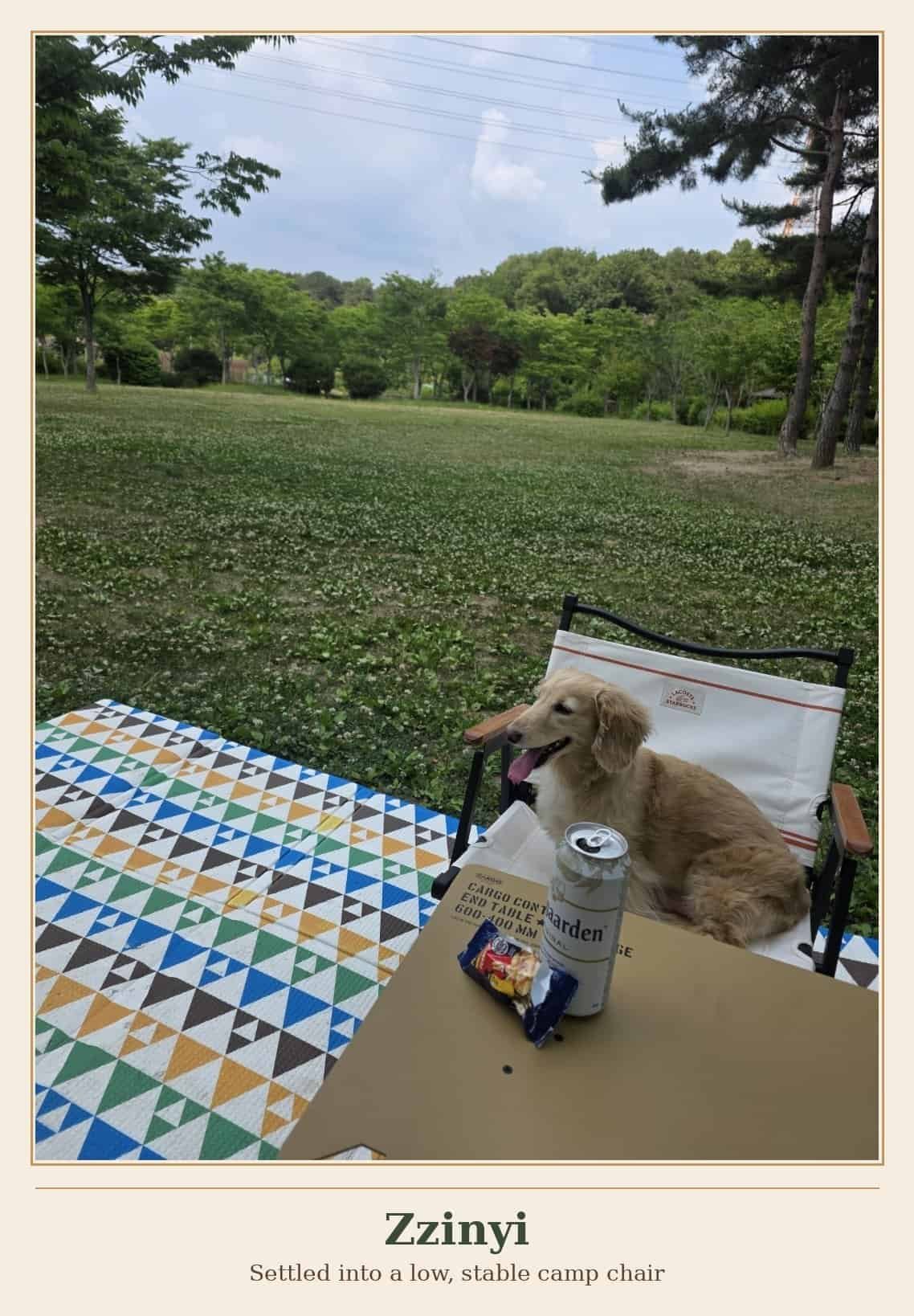
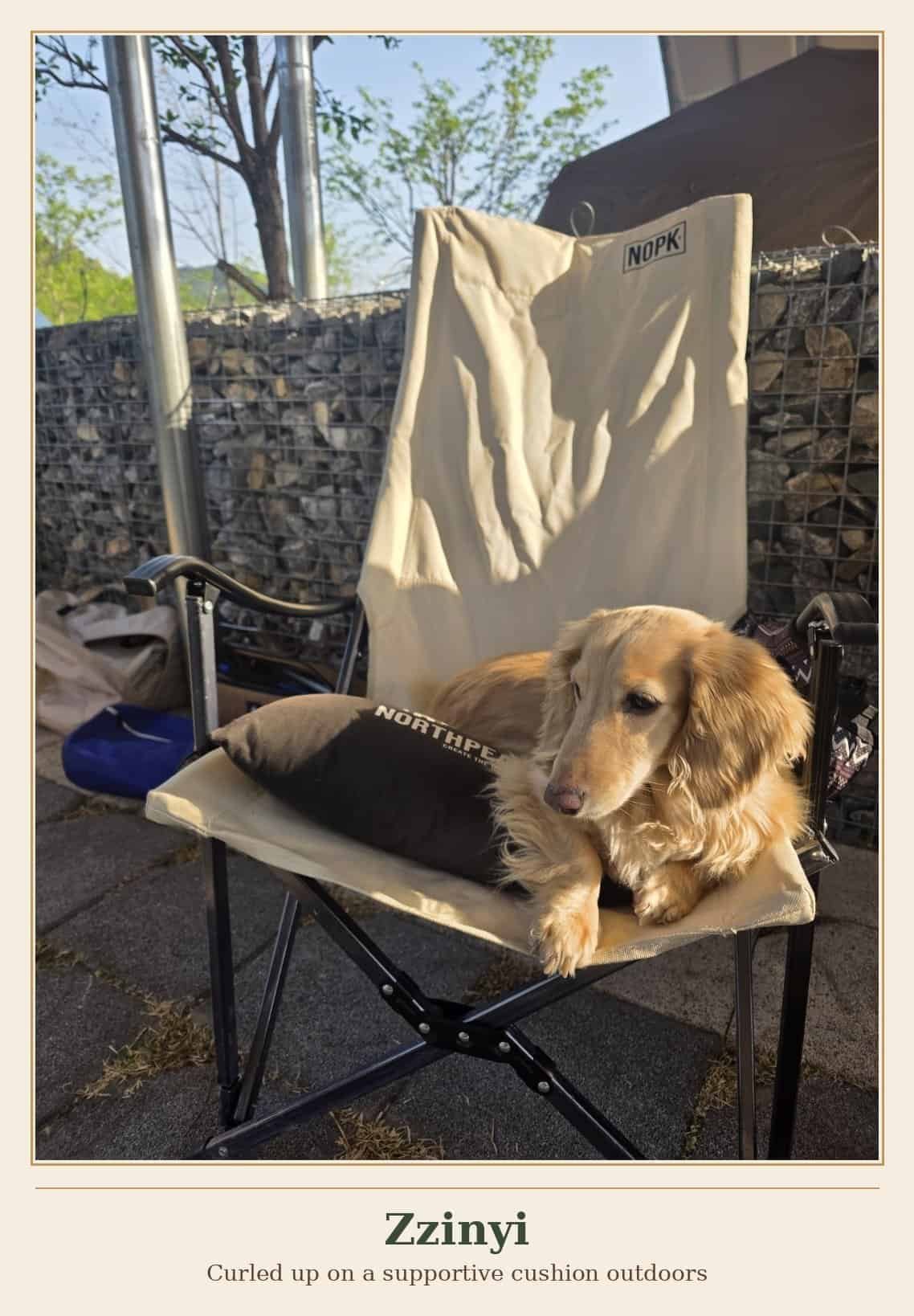
A low, stable camping chair. He’s not supposed to be jumping on and off furniture, so a chair he can climb into with a short step (or that we lift him gently onto) beats anything tall or wobbly. The low folding camp chairs most people already bring for themselves work fine — the key is that it’s stable enough not to tip when he settles in.
A supportive mat or pad, not bare ground. Cold, hard, or uneven ground isn’t kind to a long back. We always put down a thick foam camping mat before letting him lie down for any length of time.
A cooler or insulated bag for water. Dachshunds overheat faster than you’d expect given their size, especially with a full double coat like Zzinyi’s. Cold water on hand, refreshed often, matters more on a hot afternoon than any toy we’ve packed.
A secure, well-fitted harness — not a collar. Given the spine concerns, any pulling or sudden stops land much better through a harness than through a collar. This matters even more at a campsite, where there are more sudden distractions (other dogs, wildlife, food smells) than on a normal walk.
What to Actually Watch Out For
A few specific things we’re careful about every single trip:
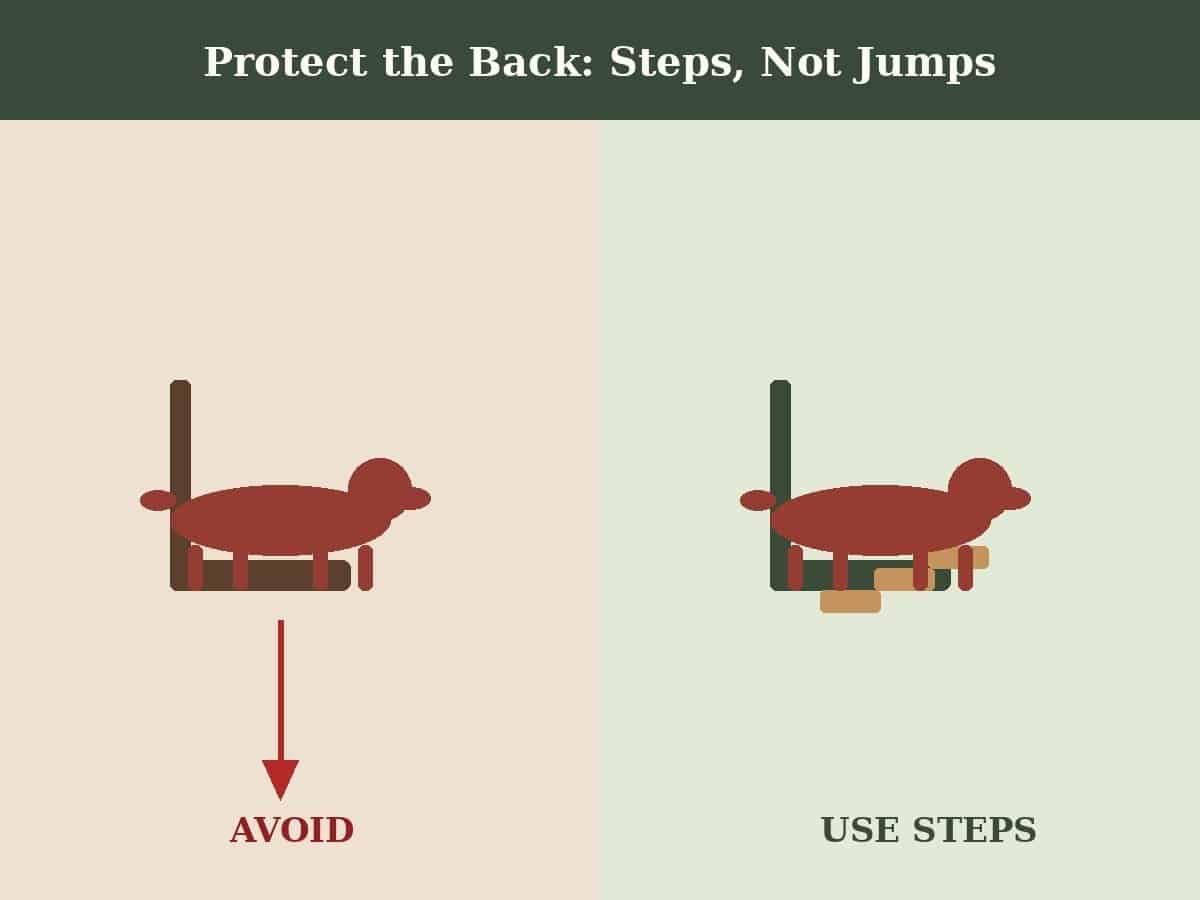
- No jumping off chairs, tables, or the tailgate. This is the single biggest one. It’s an easy habit to let slide when you’re relaxed and he’s excited, but it’s exactly the kind of repeated small impact that adds up to spine problems over time.
- Uneven or slippery terrain. Wet grass, loose gravel, and root-covered trails are all harder on short legs than they look. We slow down and let him pick his own pace rather than towing him along ours.
- Heat during the middle of the day. Longhaired dachshunds carry a lot of coat. We plan our most active time for morning or early evening and treat midday as nap time in the shade.
- Other dogs and wildlife at the campsite. A dachshund’s prey drive is real, and a sudden lunge on a leash is exactly the kind of jolt we’re trying to avoid. Keeping him on a shorter lead in busy areas isn’t overprotective — it’s just practical.
Choosing a Campsite That Actually Works for Him
Not every site is equal once you’re looking at it through a short-legged lens. We’ve learned to check a few things before we even pack the car:
Flat ground over scenic ground. A site with a steep slope down to the water might look better in photos, but it usually means more scrambling than we want him doing. A gently sloped or flat pitch wins every time.
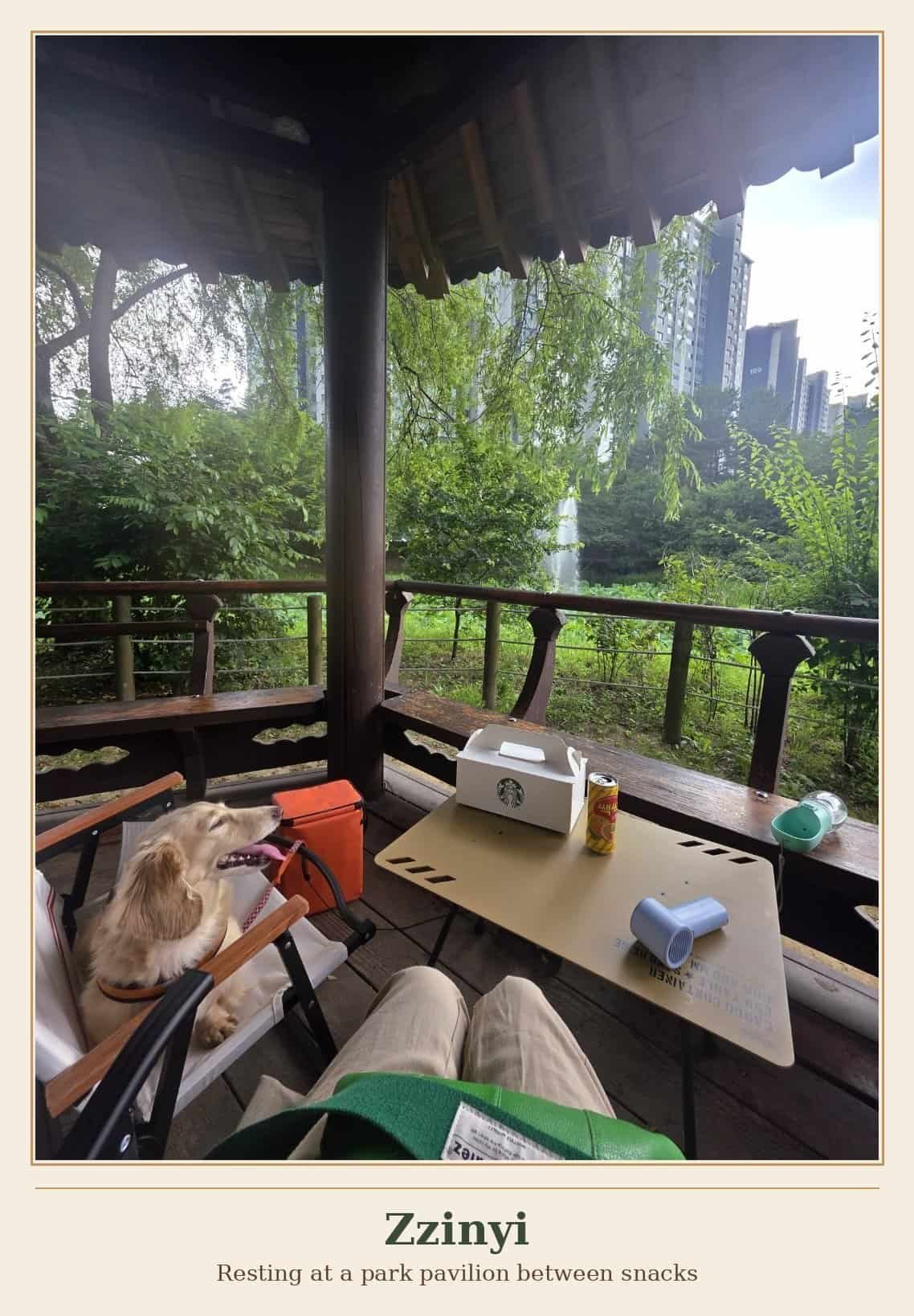
Shade that lasts most of the day, not just at sunset. Tree cover or a pavilion like the one in the first photo above means we’re not stuck rearranging a canopy every hour as the sun moves.
Distance from the parking spot. A shorter carry from the car matters more than it sounds — it’s less time on pavement or gravel, and less opportunity for an overexcited scramble out of the car before we’re ready for him.
None of this rules out popular or lively campgrounds. It just changes which spot within the campground we pick.
Packing List for a Dachshund-Friendly Trip
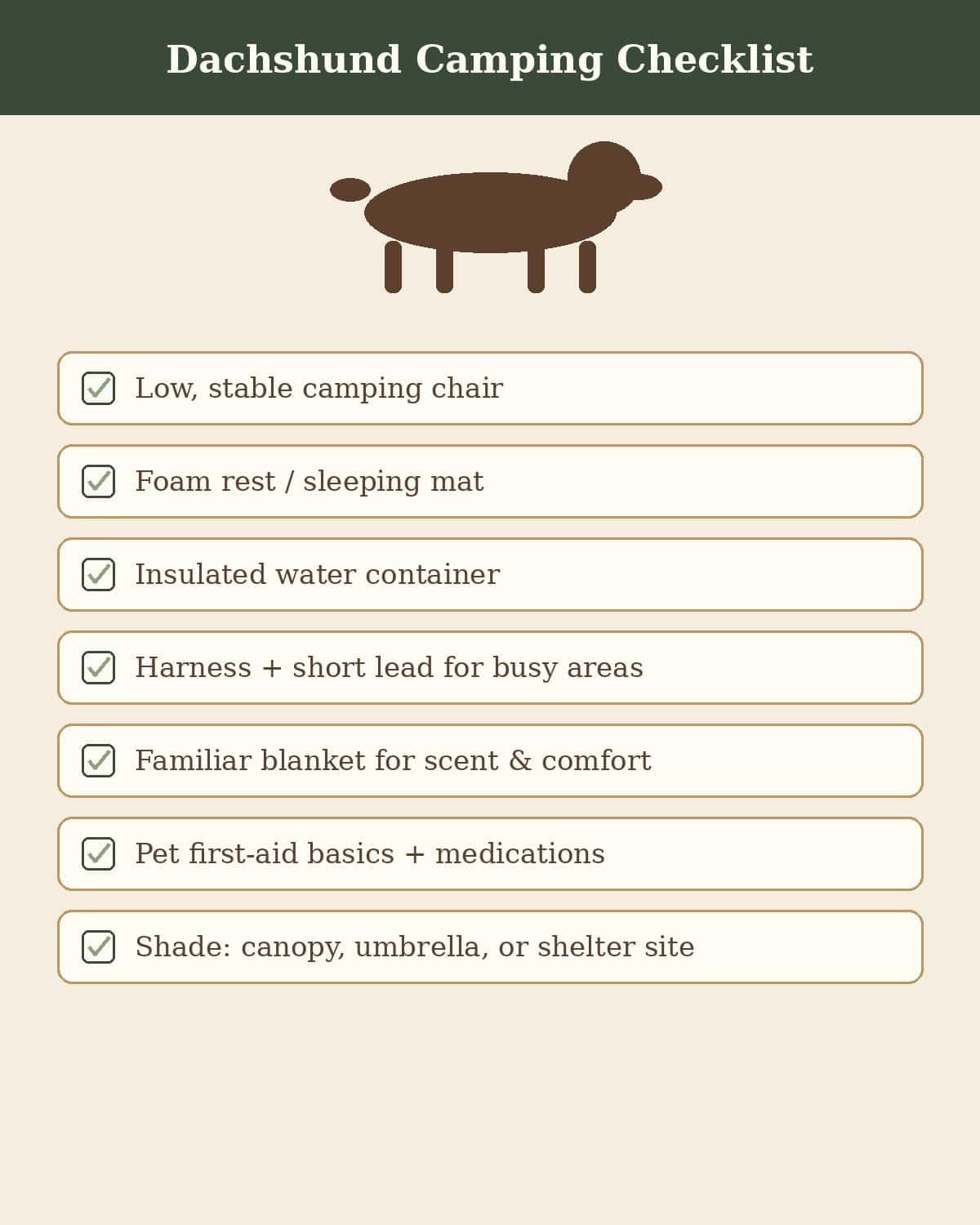
- Low, stable camping chair
- Foam sleeping/rest mat
- Insulated water container, refilled often
- Harness (not collar) plus a shorter lead for busy areas
- A familiar blanket or bed layer for scent and comfort
- Any regular medications, plus a basic pet first-aid kit
- Shade solution — a canopy, umbrella, or a pavilion/shelter site if you can get one
Is It Actually Worth It?
For us, completely. Some of my favorite photos of Zzinyi are from these trips — dozing in a camp chair with a full lake view behind him, or sprawled out on a picnic mat in an open field with his ears doing that thing where they catch every bit of wind. He’s noticeably more relaxed after a day outside than after a normal walk around the block, and I don’t think that’s a coincidence. Dogs bred for tunneling and fieldwork tend to come alive outdoors, longhaired coat and short legs included.
The precautions above aren’t complicated, and none of them mean fewer trips — they just mean the trips are actually good for him instead of a quiet risk we’re choosing not to think about.
According to the American College of Veterinary Surgeons, minimizing jumping and repeated spinal stress is one of the most effective ways owners can reduce IVDD risk in predisposed breeds — which lines up exactly with what we do differently when we camp with him.
Want more of Zzinyi’s outdoor trips and the gear that actually holds up? Join our newsletter for new posts and behind-the-scenes photos as soon as they’re up.
FAQ
Is camping bad for a dachshund’s back?
Camping itself isn’t the problem — specific activities within it are. Jumping off elevated surfaces, scrambling over rough terrain, or being lifted incorrectly are the actual risk factors, not being outdoors in general.
Can dachshunds handle sleeping outside in a tent?
Yes, as long as they have proper insulation from the ground (a mat, not bare tent floor) and the overnight temperature is reasonable for their coat type. Longhaired dachshunds like Zzinyi handle cooler nights better than smooth-coated ones.
Do I need special gear made for dachshunds specifically?
Not necessarily. Regular camping gear works fine as long as you choose low, stable pieces (chairs, steps) and avoid anything that requires jumping or climbing.
How hot is too hot for a dachshund while camping?
There’s no single universal number, but if you’re seeking shade or feeling overheated yourself, assume he is too — sooner than you’d expect given his coat. When in doubt, move to shade and offer water; consult your veterinarian about heat tolerance specific to your dog’s age and health.