Most dogs handle the rabies vaccine with nothing more than mild, short-lived side effects — a little soreness, a little extra sleep. But “most” isn’t “all,” and it helps to know the full range of what can happen, from the common and harmless to the rare reactions that need same-day vet care.
Common Side Effects (Seen in Many Dogs)
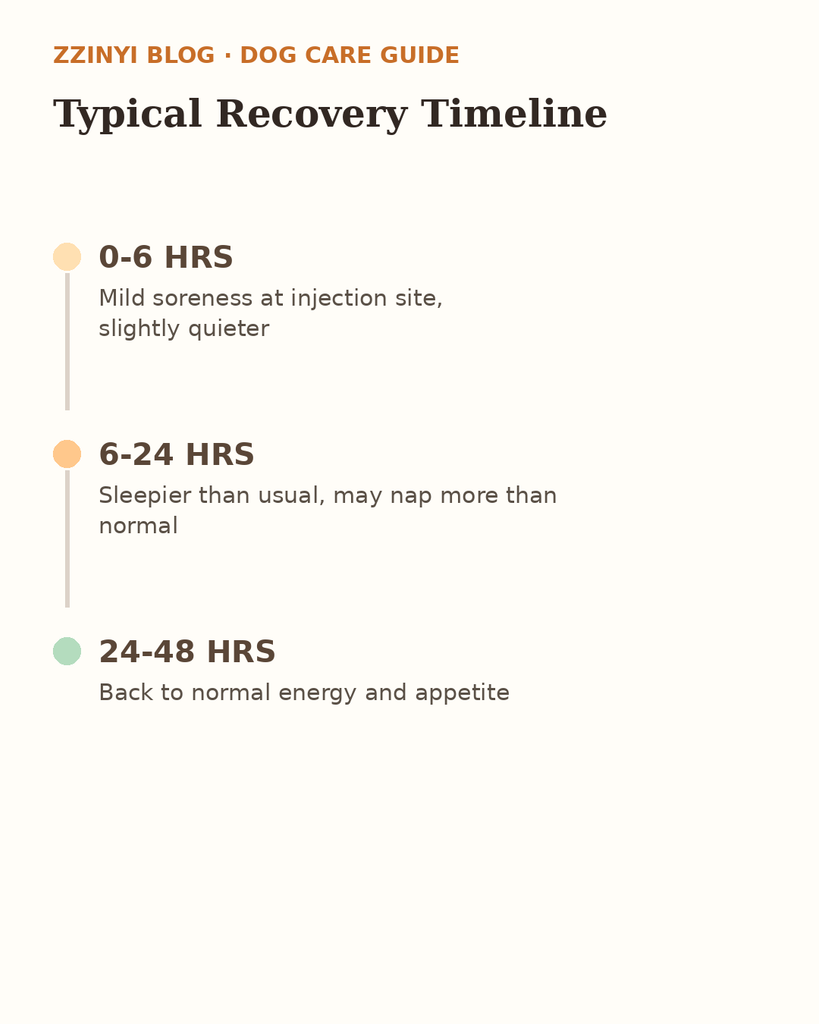
These show up in the first 24–48 hours and resolve on their own:
- Mild pain or tenderness at the injection site
- A small, soft lump where the shot was given (can last a few weeks)
- Low energy or extra sleepiness
- Slightly reduced appetite
- Mild, short-lived fever
Less Common but Still Manageable
A smaller number of dogs experience something a bit more noticeable but still not an emergency:
- Mild swelling around the injection site
- Hives or mild itching
- Reluctance to be touched near the injection site
These are worth a call to your vet if they don’t improve within a day or two, but they’re not typically urgent on their own.
Rare but Serious Reactions (Seek Immediate Care)
True allergic reactions to vaccines are uncommon, but they can escalate quickly and need same-day veterinary attention:
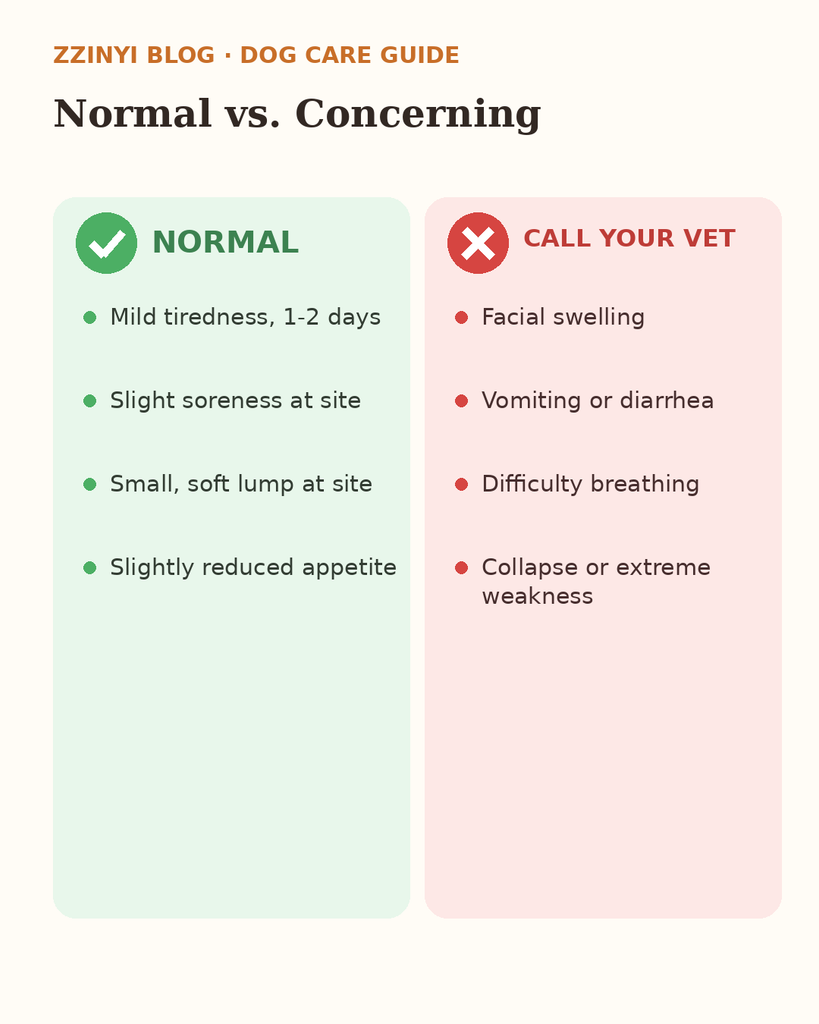
- Facial or muzzle swelling
- Difficulty breathing
- Repeated vomiting or diarrhea
- Hives covering large areas of the body
- Collapse, extreme weakness, or pale gums
This type of reaction usually appears within the first few hours after vaccination, which is part of why some vets recommend staying nearby or scheduling shots earlier in the day.
Are Small Breeds More Likely to React?
Research on vaccine reactions has found that smaller-breed dogs are statistically somewhat more likely to have a reaction than larger dogs, particularly when multiple vaccines are given at once. This doesn’t mean a small dog will react — most don’t — but it’s a reasonable reason to ask your vet about spacing out multiple vaccines if your dog is due for more than one at a visit.
How Long Do Side Effects Typically Last?
| Side effect | Typical duration |
|---|---|
| Injection site soreness | 1-3 days |
| Small lump at injection site | Up to a few weeks |
| Tiredness / low energy | 24-48 hours |
| Reduced appetite | 24 hours |
| Mild swelling or hives | Usually resolves within a day with vet guidance |
What to Do After the Vaccine
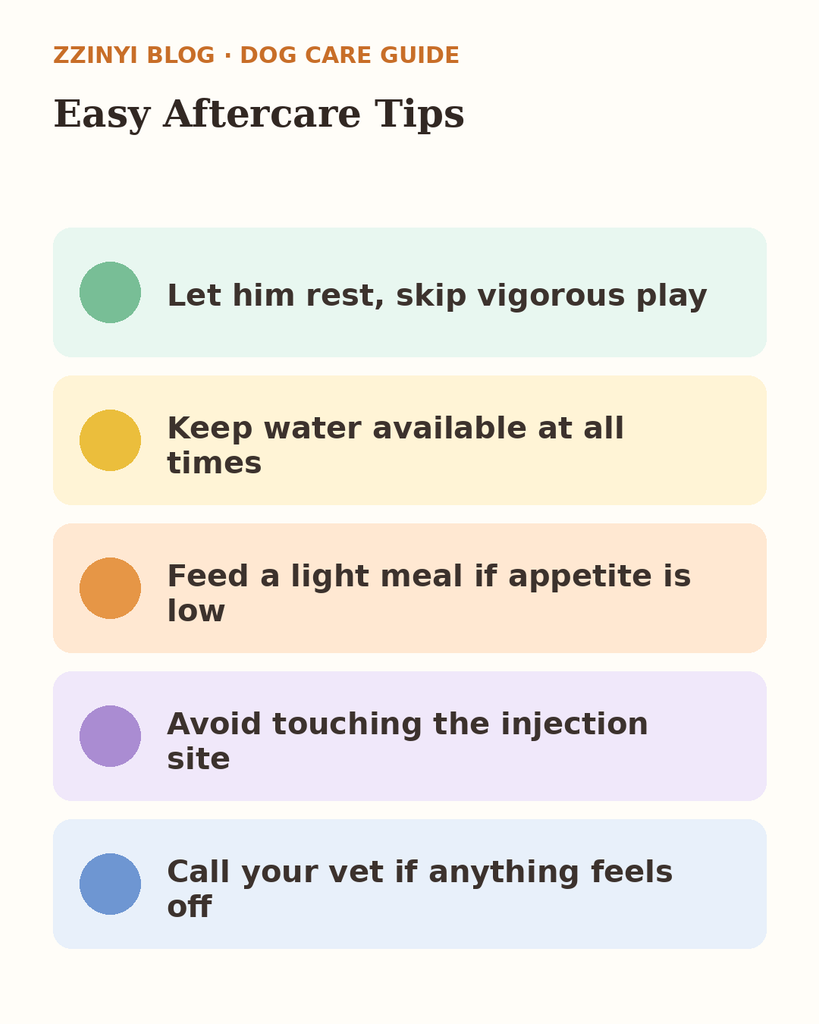
Keep things low-key for the rest of the day: skip strenuous exercise, make sure water is available, and keep an eye on the injection site without touching it too much. A slightly quieter dog is expected — a dog who seems to be getting worse rather than better over the following day is the signal to call your vet.
FAQ
Can a dog have a delayed reaction days after the vaccine?
It’s uncommon but possible for a lump or mild irritation to appear a few days later. A delayed severe allergic reaction is very rare — most serious reactions happen within hours.
Do rabies vaccine side effects get worse with each dose?
Not necessarily, but a dog who’s had a reaction before is more likely to react again, so mention any past reaction to your vet before future vaccinations.
Is it safe to give multiple vaccines at the same visit?
It’s common practice and generally safe, but if you’re concerned about your dog’s reaction risk, ask your vet about spacing vaccines across separate visits.
What should I bring up with my vet before the appointment?
Any past vaccine reactions, current medications, and any recent illness — all of these can affect how your vet approaches the visit.