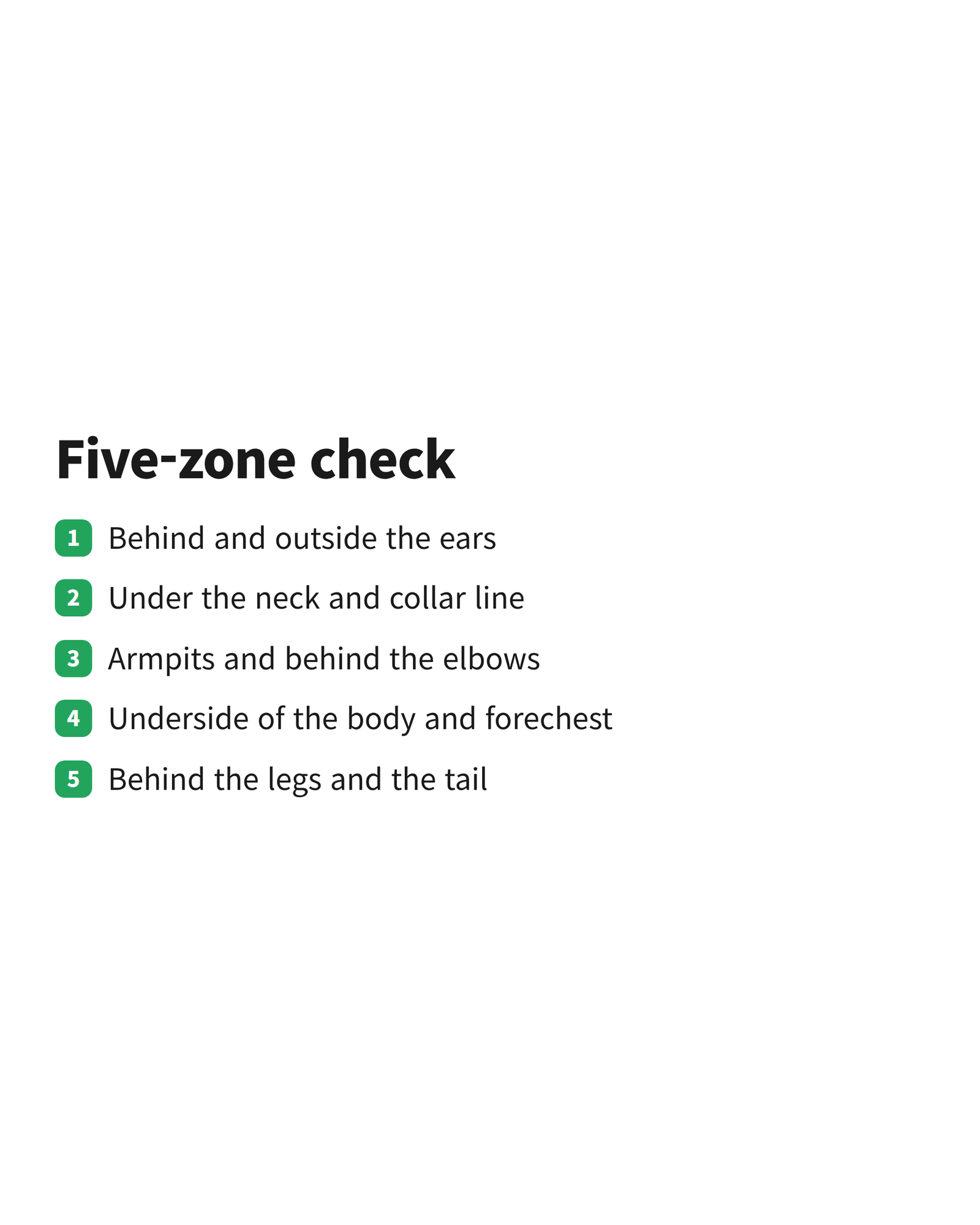
Long haired dachshund mats do not start where the coat looks thickest. They start where two surfaces rub. The U.S. Department of Agriculture’s Animal and Plant Health Inspection Service locates mats “under the collar, behind the ears, and in the armpits”. Both the American Kennel Club and The Kennel Club locate a dachshund’s longest hair under the neck, on the underparts of the body, behind the legs and on the tail. Overlay those two documents and five specific zones fall out, and those five are the ones to check first.
Where do mats form first on a long haired dachshund?
Mats form first in the five places where long feathering and constant rubbing overlap. Animal and Plant Health Inspection Service Animal Care Aid AC-18-001, issued October 2018 and reviewed February 2024, names rubbing points as the common sites for matted hair. The breed standards supply the second half of the map. The American Kennel Club standard, effective 2018-01-01, describes hair that “is longer under the neck and on forechest, the underside of the body, the ears and behind the legs”. The Kennel Club standard, last updated 2025-04-01, adds abundant feathering behind the legs and a tail that “forms a flag”.
| Coat zone | Why it mats there | Source that names it |
|---|---|---|
| Behind and outside the ears | Long ear feathering plus head movement and ear rubbing | AKC standard; APHIS AC-18-001 |
| Under the neck and collar | Standards place the longest hair exactly where a collar sits | The Kennel Club; APHIS AC-18-001 |
| Armpits and behind the elbows | Limb movement plus straps crossing the chest | APHIS AC-18-001 |
| Underside of body and forechest | Low underbody hair collects debris and grass seeds | AKC standard; RSPCA Australia |
| Behind the legs and tail flag | Abundant feathering and the greatest hair length on the tail | The Kennel Club; AKC standard |
Why does a long haired dachshund still get mats if you brush every day?
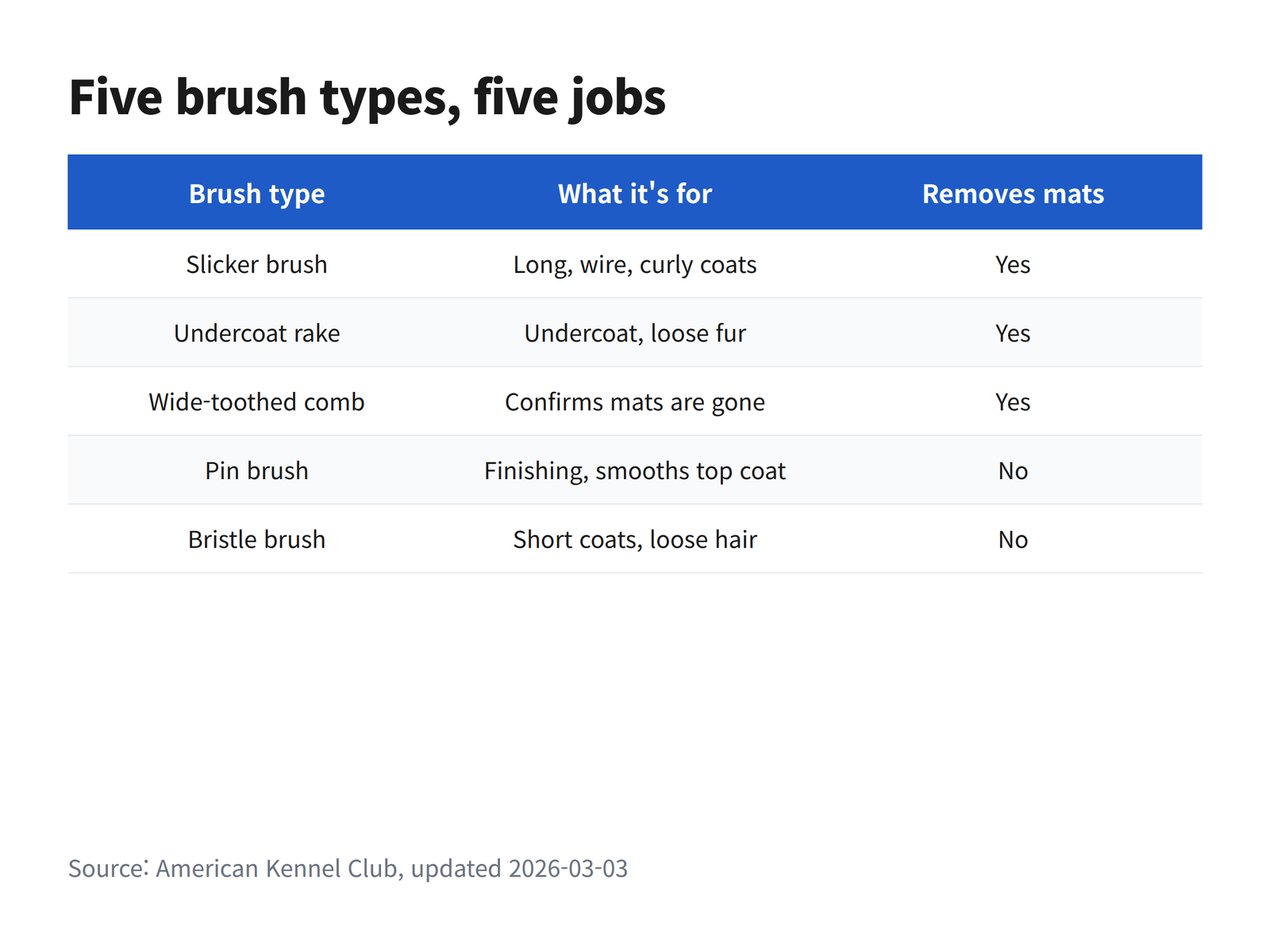
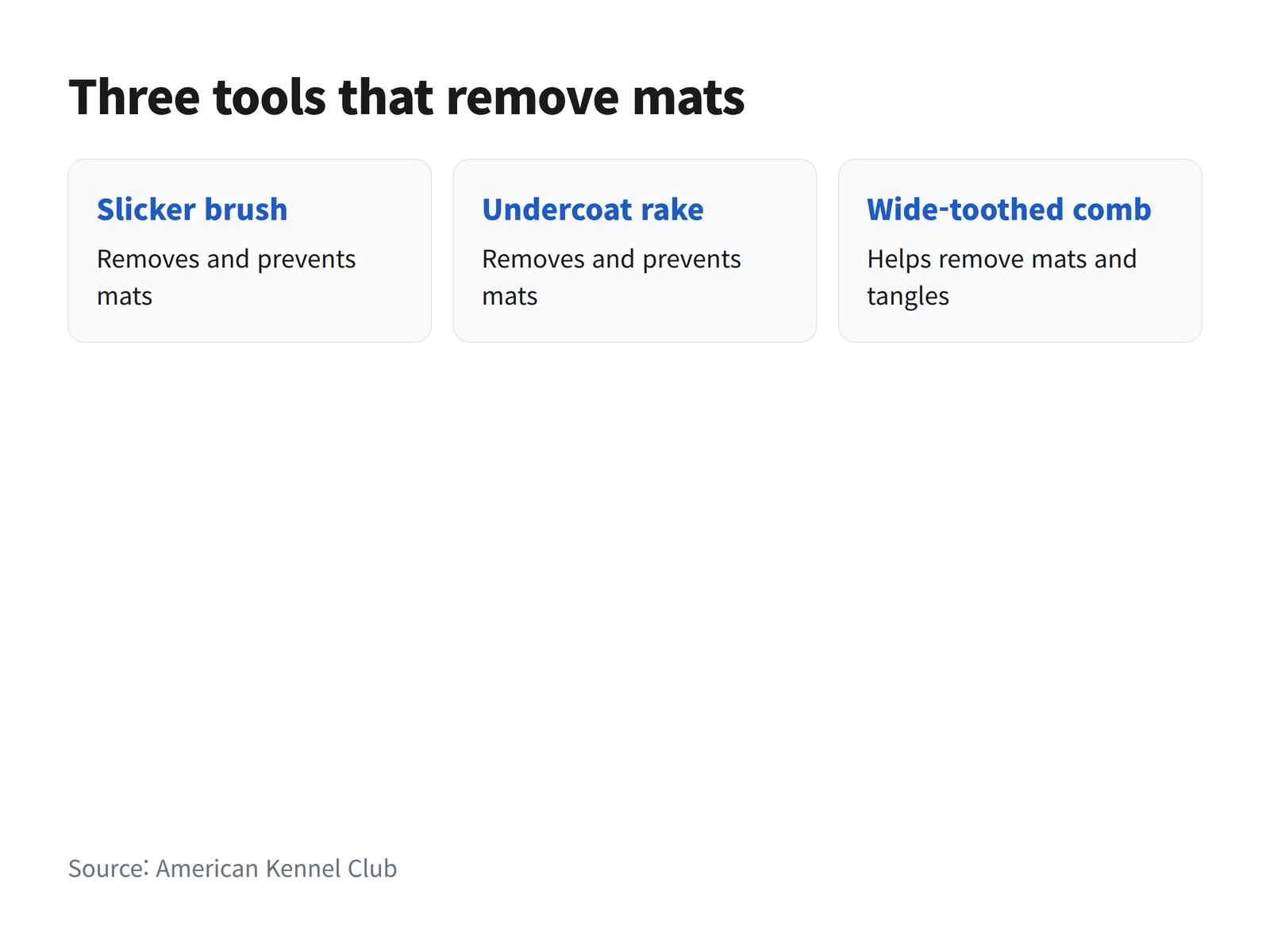
Daily brushing removes mats only if the tool is a mat-removing tool. The American Kennel Club, in guidance updated 2026-03-03, classes the pin brush as a finishing brush “best used as finishing brushes for long-coated breeds to smooth the hair and remove dirt”, and classes the bristle brush as a short-coat tool for removing loose hair and dander. The three tools the American Kennel Club names for removing and preventing mats are the slicker brush, the undercoat rake and the wide-toothed comb.
That distinction matters because of where the feathering sits. A pin brush glides over the top line of a long haired dachshund without ever reaching the armpit, the underside of the chest or the hair behind the elbows. Animal and Plant Health Inspection Service also states that “the frequency of brushing, whether daily or weekly, is going to vary by breed, type, and length of hair”, so a fixed daily habit with the wrong tool still leaves the five friction zones untouched.
Does a collar or harness make matting worse on a long-backed dog?
A collar and a harness sit directly on two of the five zones, which is why body shape matters here. The Kennel Club standard places the longest hair “under neck”, and Animal and Plant Health Inspection Service places mats “under the collar”. Those are the same square inches of coat. The chest and armpit straps of a harness cross the forechest and the armpits, which the American Kennel Club standard and AC-18-001 name in turn.
On a low, long-backed, short-legged dog the effect concentrates rather than spreads. The underbody hair the standards describe hangs close to the ground, and RSPCA Australia lists grass seeds in the coat among the things to look for during a grooming session. No source tested whether a particular collar or harness design reduces matting, so the practical point is narrower: check under every strap you fasten, every time you remove it.
Which brush actually reaches the feathering on a small long haired dog?
The mat-removing tools named by breed and welfare bodies are the slicker brush, the undercoat rake and the wide-toothed comb. The American Kennel Club describes the slicker brush for “medium-coated, long-coated, wire-coated, and curly-coated dogs to remove mats (and prevent mats from forming)”, and describes the undercoat rake as “designed to penetrate through to the undercoat to remove loose fur, and remove and prevent mats”. Wide-toothed combs, in the same guidance, “can also help remove mats and tangles”.
Dachshund Health UK, a breed health body, is more specific for this breed group. Its grooming guidance calls for regular grooming of Long and Wire Dachshunds “at least weekly” using a bristle brush and a wide-toothed metal comb, and asks owners to “pay particular attention to the longer hairs on the legs” to ensure there are no tangles. The comb, not the brush, is what confirms a zone is actually clear.
Is it safe to cut a dog’s mats out with scissors?
Three authorities give three different answers, and the disagreement is worth knowing before you pick up scissors. The ASPCA is absolute. Dr. Julie Horton, writing for the organisation on 2015-03-11, states: “NEVER cut mats out with scissors. Your pet can unexpectedly move or jerk resulting in a severe laceration or puncture.”
Animal and Plant Health Inspection Service takes a different position in AC-18-001, describing mats as removable by shaving with clippers or cutting with scissors, and recommending blunt-tipped bandage scissors. RSPCA Australia sits between the two: blunt-nosed safety scissors are acceptable, but be very careful not to touch the skin, and if you are uncertain about trimming a mat safely or the mat is close to the skin, it may be safest to have a professional groomer or a veterinarian help.
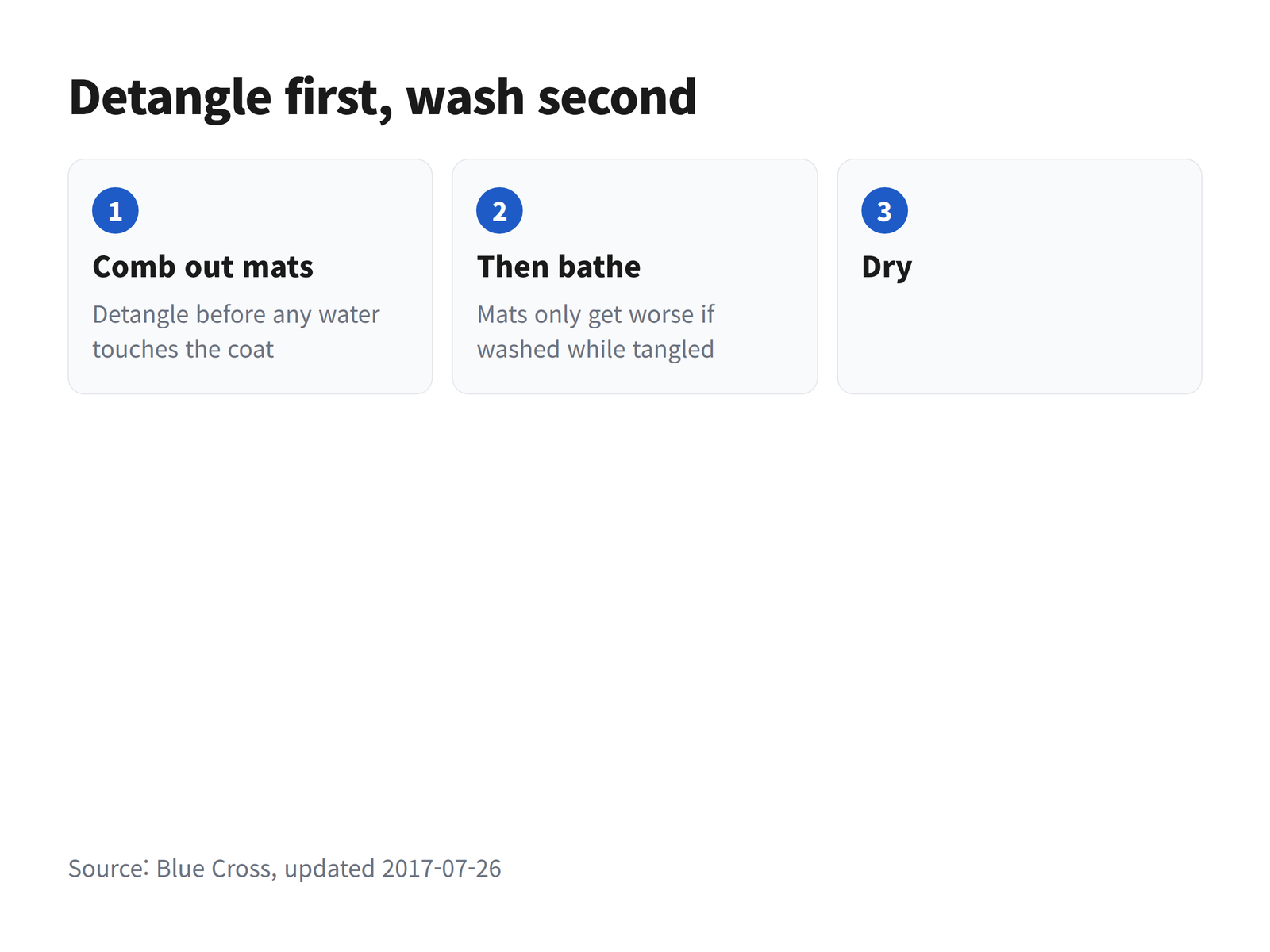
Clippers carry their own caution. Animal and Plant Health Inspection Service warns that clippers get hot with use and may burn the skin, and suggests cooling products or alternating between clippers. Order of operations also matters: Blue Cross, in guidance last updated 2017-07-26, says to “detangle any matts before washing as they will only get worse during shampooing”.
How often should a long haired dachshund be brushed?
The bodies that publish grooming frequencies give a range, not a single number, so the honest answer is a range. RSPCA Australia, in Knowledgebase guidance dated 2022-01-19, says dogs with long, heavy coats prone to matting “should normally be groomed every day to prevent the build up of dead but not shed hair, the development of matts, and the associated problems like discomfort and inflammation”. Dachshund Health UK sets a floor of at least weekly for Long and Wire Dachshunds.
Blue Cross gives at least once a week for short-haired smooth-coated dogs and, for rough or long-coated dogs, clipping every 4 to 12 weeks with maintenance brushing usually daily in between. For context on how seriously matting is treated, the U.S. federal standard at 9 CFR 3.13(a)(4) requires care ensuring “healthy and unmatted hair coats”. That rule binds licensed dealers, exhibitors and research facilities under the Animal Welfare Act, not private owners, so treat it as evidence of framing rather than a rule you are bound by.
What does matted hair actually do to a dog’s skin?
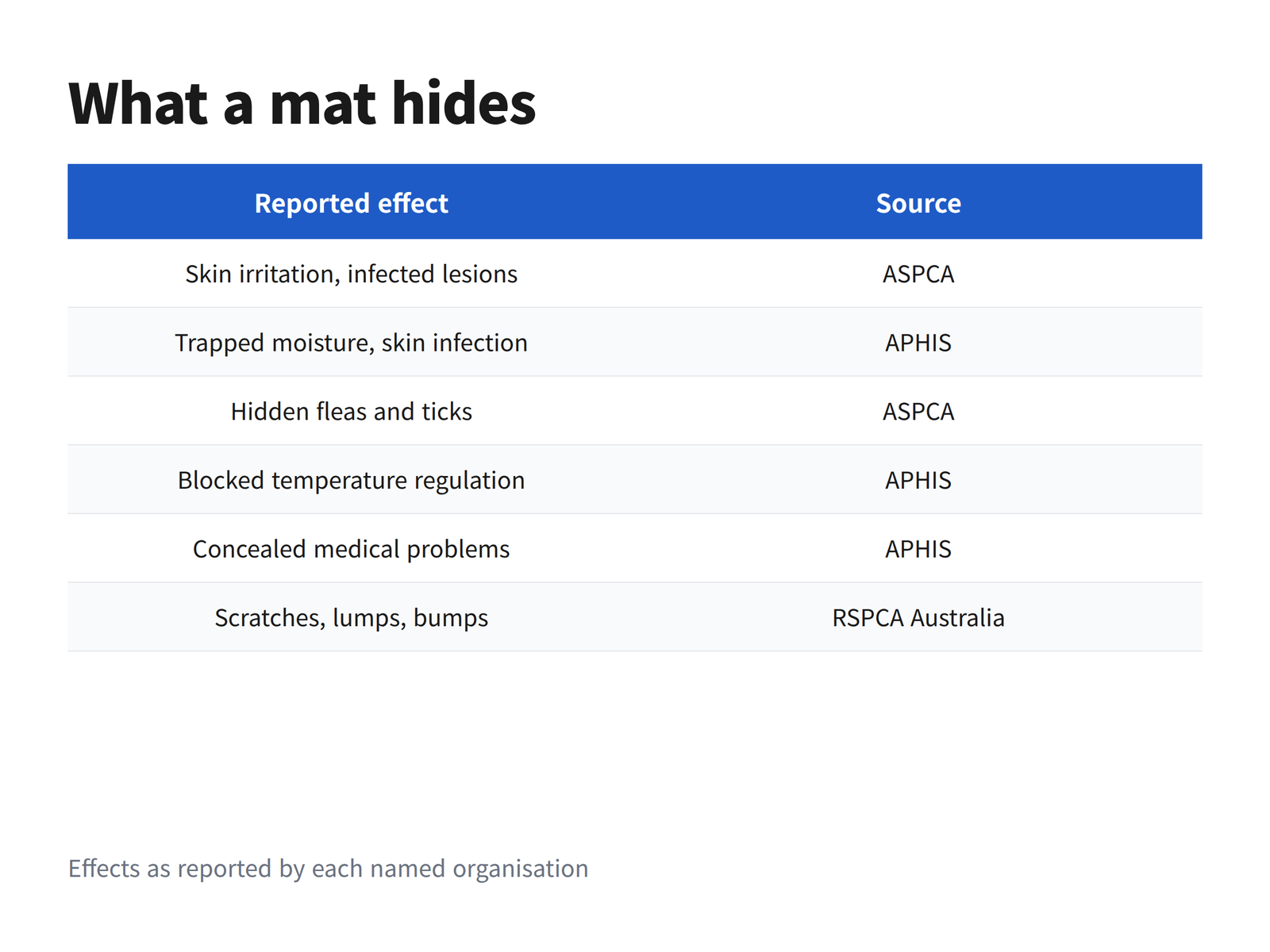
Matted hair irritates skin and can hide problems from view. Dr. Julie Horton of the ASPCA states that “even very mild hair mats can cause skin irritation and progress to infected lesions”. Animal and Plant Health Inspection Service adds that matted hair can trap moisture leading to skin infections, interfere with temperature regulation and with vision and hearing, and conceal underlying medical problems.
The concealment is the part owners underestimate. The ASPCA notes that fleas and ticks can live deep inside a mat out of sight, that severe mats can act like strangulating wounds, and that mats around the hind end can cause faecal accumulation. RSPCA Australia lists scratches, inflamed areas, lumps and bumps among the things to look for while grooming, and says these “might need to be checked by your veterinarian”. If a mat is tight against the skin, or the skin under it looks red, raw or sore, consult your veterinarian rather than working on it at home.
Frequently asked questions
Can a tight mat be brushed out? Not reliably, and the bodies quoted here do not agree on the alternative. The ASPCA rules out scissors entirely, Animal and Plant Health Inspection Service permits blunt-tipped bandage scissors, and RSPCA Australia permits blunt-nosed safety scissors while advising professional help when a mat sits close to the skin.
Should a matted coat be bathed first? No. Blue Cross guidance updated 2017-07-26 states that mats only get worse during shampooing, so detangling comes before washing.
Do long haired dachshunds need clipping as well as brushing? Blue Cross gives an interval of every 4 to 12 weeks for rough or long-coated dogs, with brushing usually daily between clips. Dachshund Health UK sets its own floor at least weekly for Long and Wire Dachshunds.
Which spot is most often missed? The armpit and the hair behind the elbows. Animal and Plant Health Inspection Service names the armpits as a common mat site, and it is the zone a top-coat pass over the back never reaches.