The main tear stain remover ingredient to avoid for a Maltese is tylosin, also listed as tylosin tartrate. Tylosin is an antibiotic, and the U.S. Food and Drug Administration (FDA) says it is not approved for any use in dogs or cats, including tear staining. FDA sent warning letters to tear stain product makers over tylosin in 2014 and again in 2017. This guide covers what those letters said, how to read a tear stain label, and why a veterinarian, not a product, should rule out eye problems first.

Which tear stain ingredient drew FDA warning letters?
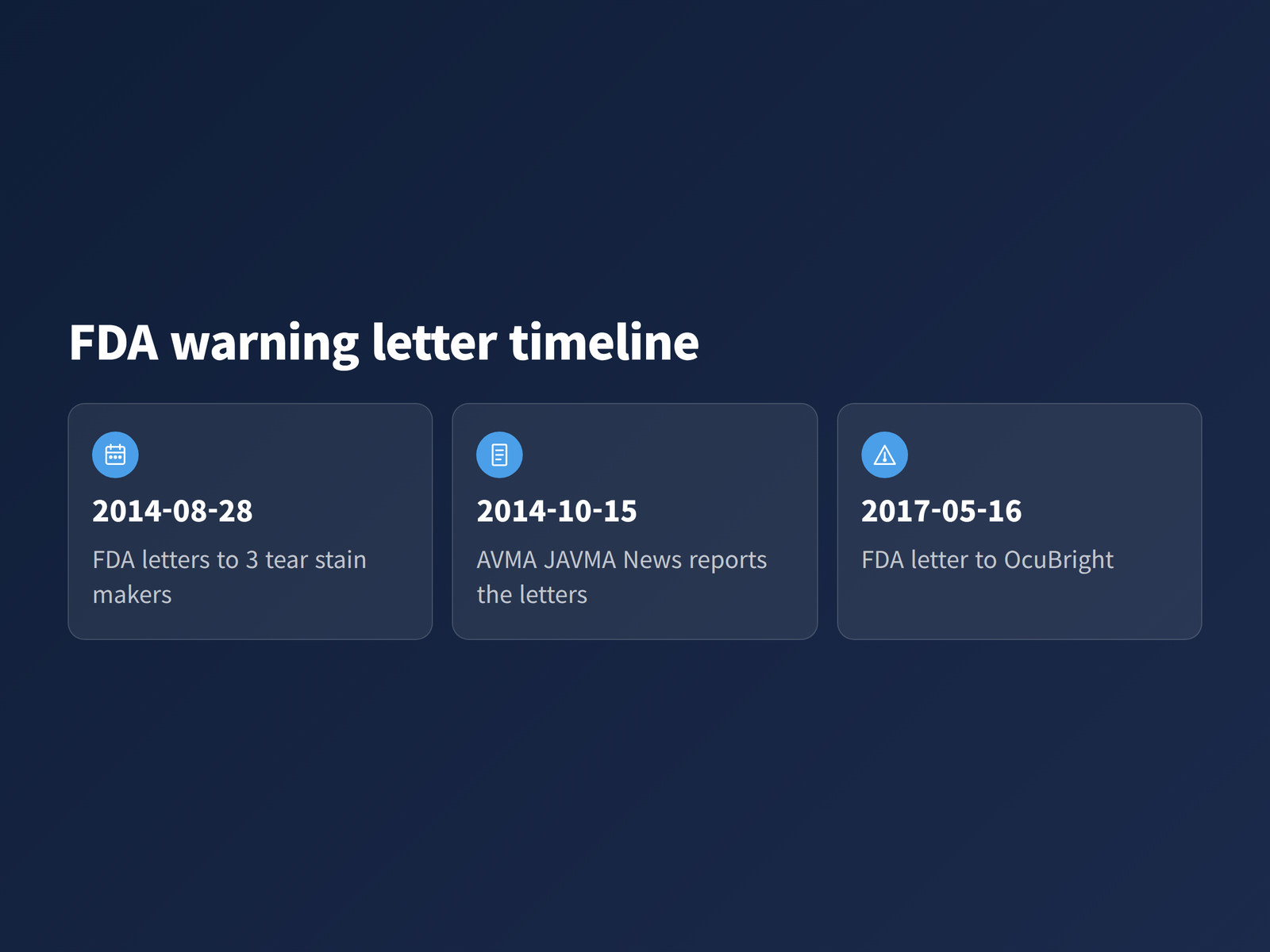
Tylosin tartrate is the tear stain ingredient that drew FDA warning letters. According to AVMA’s JAVMA News (2014-10-15), FDA issued warning letters on 2014-08-28 to three companies: Blanc du Blanc, I’m a Little Teacup, and Petaware. The products named in those 2014 letters were Angels’ Glow, Angels’ Eyes, Pets’ Spark, Clean Eyes, Sparkle Eyes, Glow Groom, and Health Glow. On 2017-05-16, FDA sent a separate warning letter to OcuBright Tear Stain Remover, Inc., covering four OcuBright SKUs in 30- and 60-count sizes. These brand names come from letters that are now several years old. Formulations can change, so a 2014 or 2017 letter does not show what any product contains today.
Why is an antibiotic tear stain chew not FDA approved for dogs?
An antibiotic tear stain chew is not FDA approved because no approved new animal drug application covers tylosin for tear staining in dogs. FDA’s 2017 letter to OcuBright states that “your products are not the subject of an approved new animal drug application.” The 2014 letters turned on how FDA defines a drug. As quoted in JAVMA News, products are “considered to be drugs if they are intended to mitigate, treat, or prevent any disease in animals or to affect the structure or function of animals’ bodies.” A grooming chew that contains an antibiotic and claims to change the body from inside falls into that drug category under FDA’s definition.
The antibiotic question also reaches beyond one Maltese. The American Veterinary Medical Association (AVMA) describes antimicrobial stewardship as “the actions veterinarians take individually and as a profession to preserve the effectiveness and availability of antimicrobial drugs.” Under that AVMA framework, antibiotic decisions belong with a veterinarian, not with a grooming product. The American Maltese Association, the breed’s AKC parent club, puts the concern plainly: “Antibiotic resistance is becoming a huge problem in the world.” The same breed club page also notes that the antibiotic approach “doesn’t work on all dogs.”
How can you spot an antibiotic on a tear stain label?
You spot an antibiotic on a tear stain label by reading the full ingredient list for “tylosin” or “tylosin tartrate.” A missing word, however, is not proof the ingredient is absent. FDA documented a company leaving tylosin off export labels on purpose. JAVMA News quotes the warning letter: “you stated that you do not list tylosin tartrate on the labels of the tear stain remover products you export so that they are not detained by customs in the country receiving them.” A clean-looking tear stain label is therefore only one signal, not a guarantee.
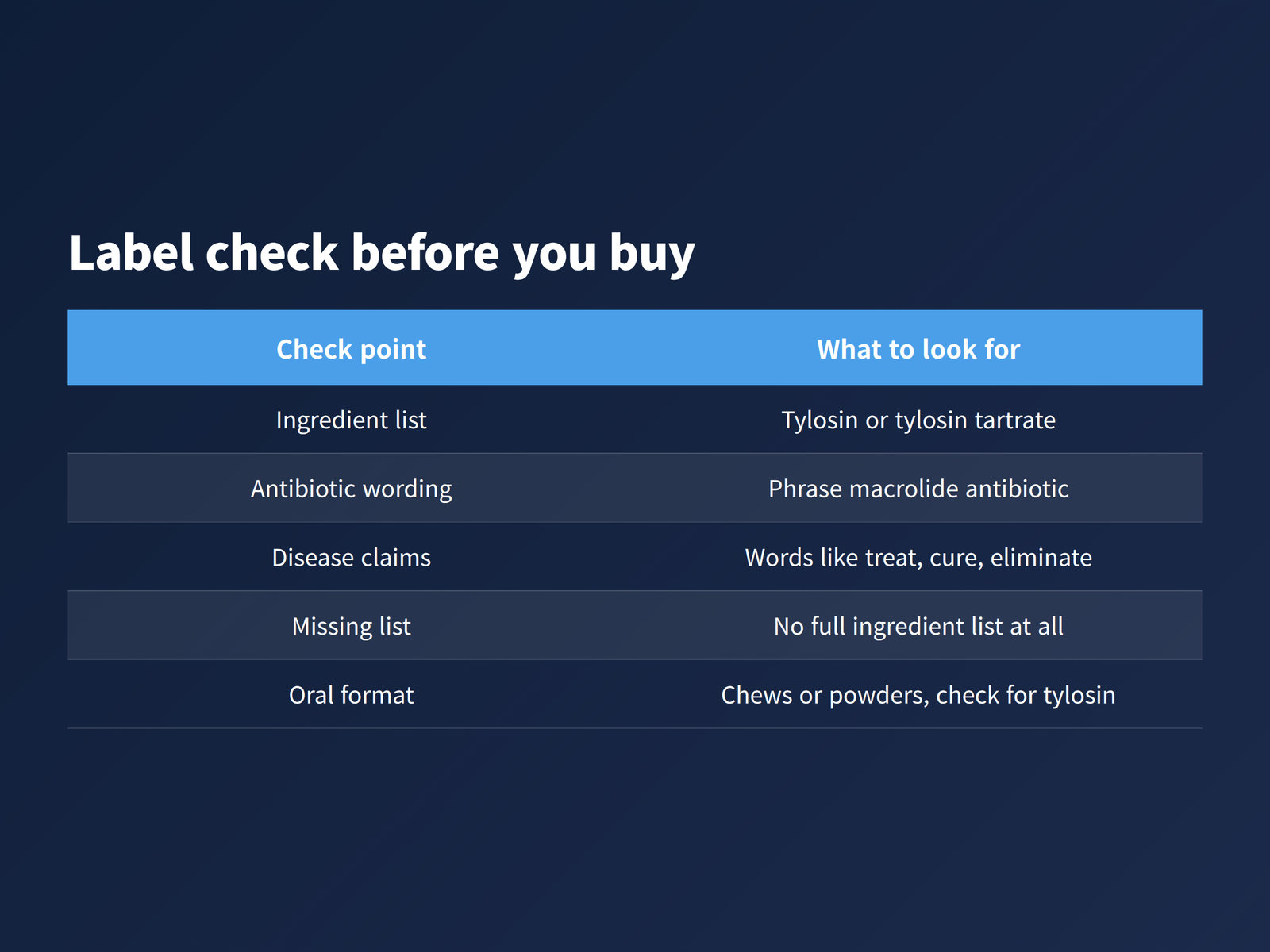
A short label check covers the points drawn from the FDA and AVMA records:
- Ingredient list: look for tylosin or tylosin tartrate by name.
- Antibiotic wording: the phrase “macrolide antibiotic” is cited in FDA’s 2017 OcuBright letter.
- Disease claims: words such as “treat,” “cure,” or “eliminate” a condition point toward drug status under FDA’s definition.
- Missing ingredient list: a product with no full list gives you nothing to check.
- Oral format: chews and powders are marketed to act inside the body, so check them for tylosin and drug-style claims.
Why do Maltese show tear stains so clearly?
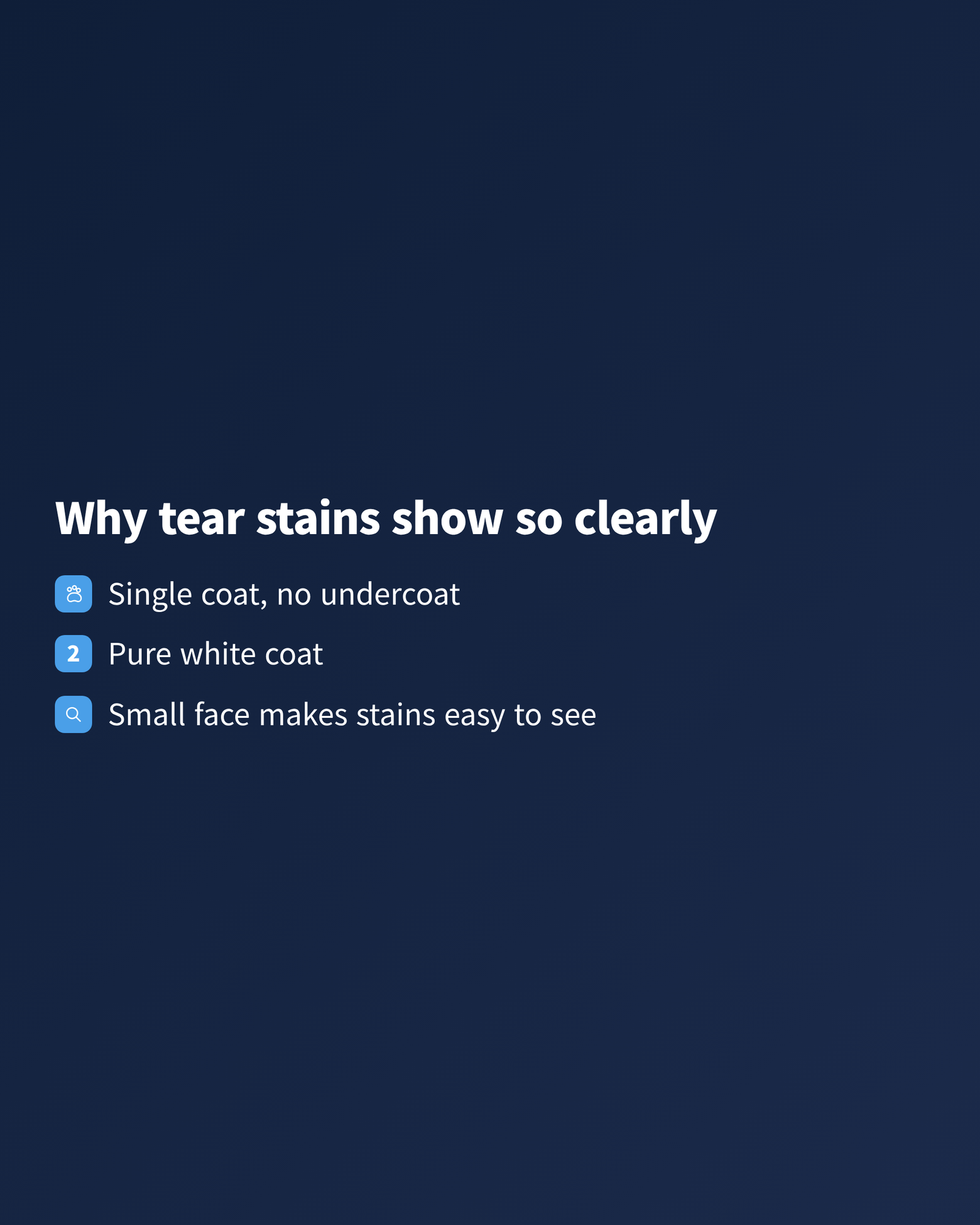
Maltese show tear stains clearly because the breed has a pure white, single coat. The AKC Official Standard of the Maltese, approved 1964-03-10, states: “The coat is single, that is, without undercoat.” The same AKC standard calls for a pure white coat and a dog under 7 lb, with 4 to 6 lb preferred. On a white face that small, any discoloration under the eyes is easy to see. That visibility is why Maltese owners search for tear stain products so often.
Visible staining is not always a grooming issue. The American Maltese Association lists several causes of tear staining, including ingrown eyelashes, eye infection, blocked tear ducts, glaucoma, and entropion. These are things a veterinarian checks for during an eye exam. A tear stain remover cannot rule any of them out. The American Maltese Association also advises keeping facial hair clean and dry, “2-3 times a day,” which is a routine owners can control without any product at all.
Wipes or chews: what does each product type actually do?
Wipes clean the fur surface, while oral chews and powders are marketed to change staining from inside the body. That difference matters for a Maltese owner reading labels. A wipe or face cleaner works on the outside of the coat, so the main checks are the ingredient list and whether the product is meant for use near the eyes. An oral chew or powder goes into the dog, so the checks shift to tylosin and drug-style claims. Neither category has strong, independent evidence behind efficacy claims, so treat any “removes stains” promise as marketing rather than fact.
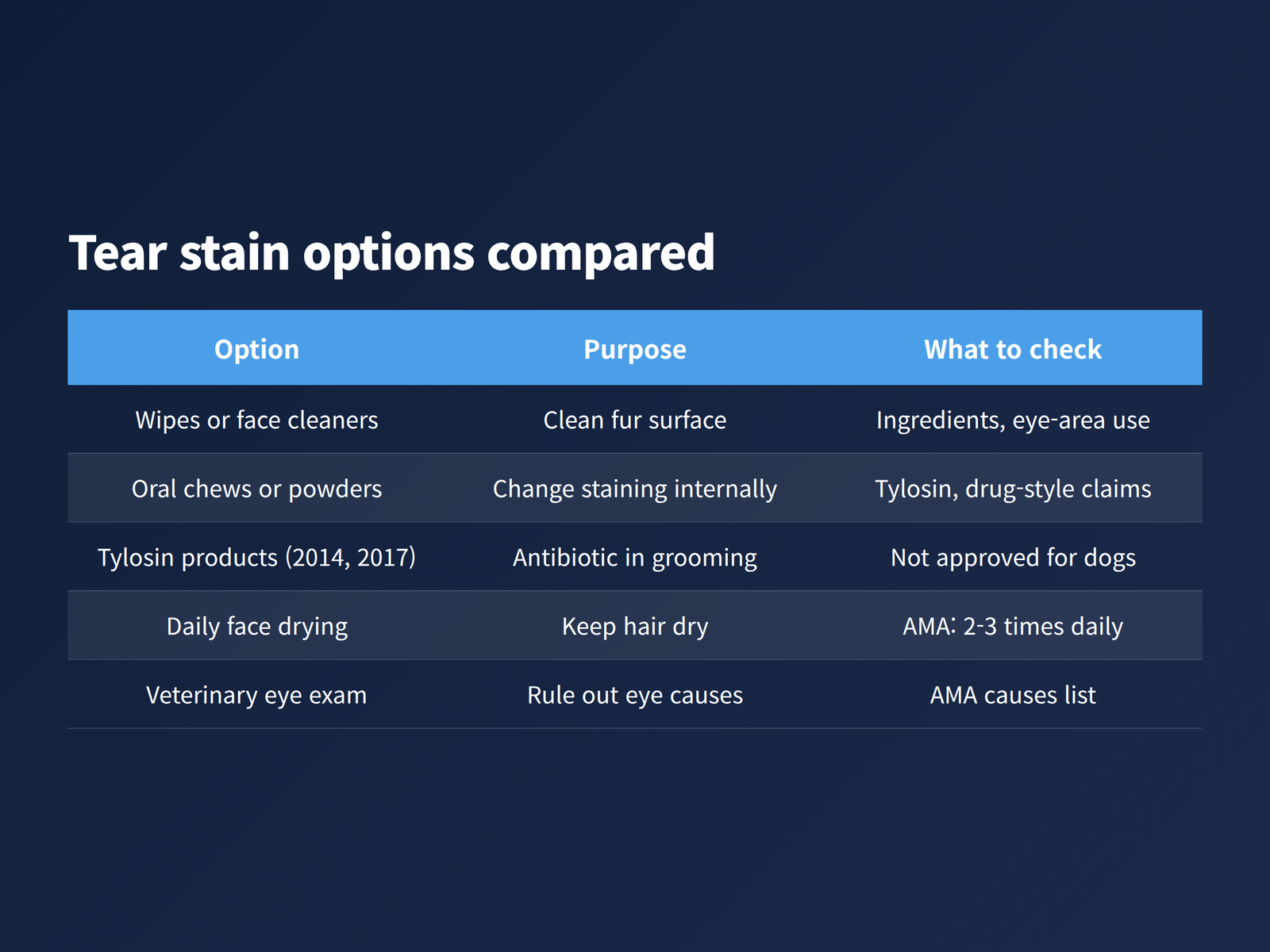
Daily face drying sits in a different category because it is a habit, not a product. The American Maltese Association recommends keeping facial hair clean and dry two to three times a day. A veterinary eye exam is the step that addresses possible medical causes. The table below sets these five options side by side.
Tear stain product types compared
| Option | Purpose | What to check |
|---|---|---|
| Wipes or face cleaners | Clean fur surface | Ingredients, eye-area use |
| Oral chews or powders | Change staining internally | Tylosin, drug-style claims |
| Tylosin products (2014, 2017) | Antibiotic in grooming | Not approved for dogs |
| Daily face drying | Keep hair dry | AMA: 2-3 times daily |
| Veterinary eye exam | Rule out eye causes | AMA causes list |
The table describes what each option is meant to do. The table does not rank products or claim that any wipe or chew works. For a Maltese, the tylosin row is the one to avoid entirely, and the veterinary eye exam row is the one that answers questions no label can.
When should a Maltese owner see a veterinarian about tear staining?
A Maltese owner should see a veterinarian before starting any tear stain chew, powder, or supplement, and whenever staining appears or changes. The American Maltese Association lists medical causes such as blocked tear ducts, glaucoma, and entropion, and only an exam can rule those out. Consult your veterinarian before giving your Maltese any product that goes into the body, especially one with an antibiotic in it. This guide stays with labels and ingredients. It is not a substitute for veterinary advice, and it does not cover diagnosis, treatment, or dosing.
A veterinarian can also answer the antibiotic question directly. AVMA’s stewardship principles place antibiotic decisions with veterinarians, and FDA has stated that tylosin is not approved for tear staining in dogs. Bringing the product label to the appointment gives the veterinarian the ingredient list to review. Whether a given product suits your dog depends on the dog’s eyes, age, and health history.

Frequently asked questions
Is tylosin safe for a Maltese with tear stains?
FDA says tylosin is not approved for any use in dogs or cats, including tear staining. Only a veterinarian should make decisions about antibiotics for your Maltese, so consult your veterinarian before using any product that lists tylosin.
Do the brands named in 2014 still contain tylosin?
There is no confirmed record of current formulations. The brand names come from FDA’s 2014-08-28 warning letters as reported by JAVMA News, and a product formula can change after a warning letter.
If a tear stain label does not list tylosin, is the product tylosin-free?
Not necessarily. FDA recorded one company leaving tylosin tartrate off export labels to avoid customs detention, so a missing ingredient name is not proof of absence.
Are tear stain wipes safer than chews?
Wipes and chews do different jobs. Wipes clean the fur surface, and chews go into the body, so chews carry the tylosin and drug-claim checks. No veterinary or regulatory source cited here rates any wipe or chew as effective, and a veterinarian is the right person to ask about either.
Sources
- U.S. Food and Drug Administration, Warning Letter: OcuBright Tear Stain Remover, Inc. 523344, 2017-05-16 — https://www.fda.gov/inspections-compliance-enforcement-and-criminal-investigations/warning-letters/ocubright-tear-stain-remover-inc-523344-05162017
- American Veterinary Medical Association, JAVMA News, “FDA warns makers of unapproved ‘tear stain’ products,” 2014-10-15 — https://www.avma.org/javma-news/2014-10-15/fda-warns-makers-unapproved-tear-stain-products
- American Veterinary Medical Association, “Antimicrobial stewardship definition and core principles” — https://www.avma.org/resources-tools/avma-policies/antimicrobial-stewardship-definition-and-core-principles
- American Kennel Club, “Official Standard of the Maltese,” approved 1964-03-10 — https://images.akc.org/pdf/breeds/standards/Maltese.pdf
- American Maltese Association, “Tear Staining” (undated) — https://www.americanmaltese.org/ama-health-information/tear-staining