A Yorkie puppy not turning blue and tan yet is usually on schedule, because the breed standard expects puppies to start that way and the change to blue and tan runs until about age two. The real question is different: is the coat slowly clearing, or is it a color that never becomes blue and tan at all? This guide covers the American Kennel Club timeline, steel blue versus silver, and the coat patterns that waiting will not change.

Why is my Yorkie puppy still black and tan?
A Yorkie puppy is still black and tan because that is the color the breed is born with. The American Kennel Club (AKC) Yorkshire Terrier standard says: “Puppies are born black and tan and are normally darker in body color, showing an intermingling of black hair in the tan until they are matured.” A dark Yorkshire Terrier puppy is therefore not a sign that something went wrong. The AKC standard, approved on July 10, 2007 and effective October 1, 2007, treats that dark puppy coat as the normal starting point.
The target color for an adult Yorkshire Terrier is blue and tan. The same AKC standard defines the blue as “a dark steel-blue, not a silver-blue and not mingled with fawn, bronzy or black hairs.” A black and tan Yorkie puppy is expected to move toward that dark steel blue on the body over time, while the head, chest and legs settle into tan.
When should a Yorkie puppy start turning blue and tan?
Most Yorkie puppies show the first signs of change on the head at around 9 to 10 weeks. An AKC article by Mary Kearl, “Yorkie’s First Year: Training Timeline” (updated April 21, 2021), gives these approximate stages for a Yorkshire Terrier puppy:
- Around 9 to 10 weeks: silver or gold hair starts to appear on top of the head
- Around week 16: black on the back begins fading to grey or light silver
- By 6 months: the final color is likely clear
- Until about age 2: the full color transition continues
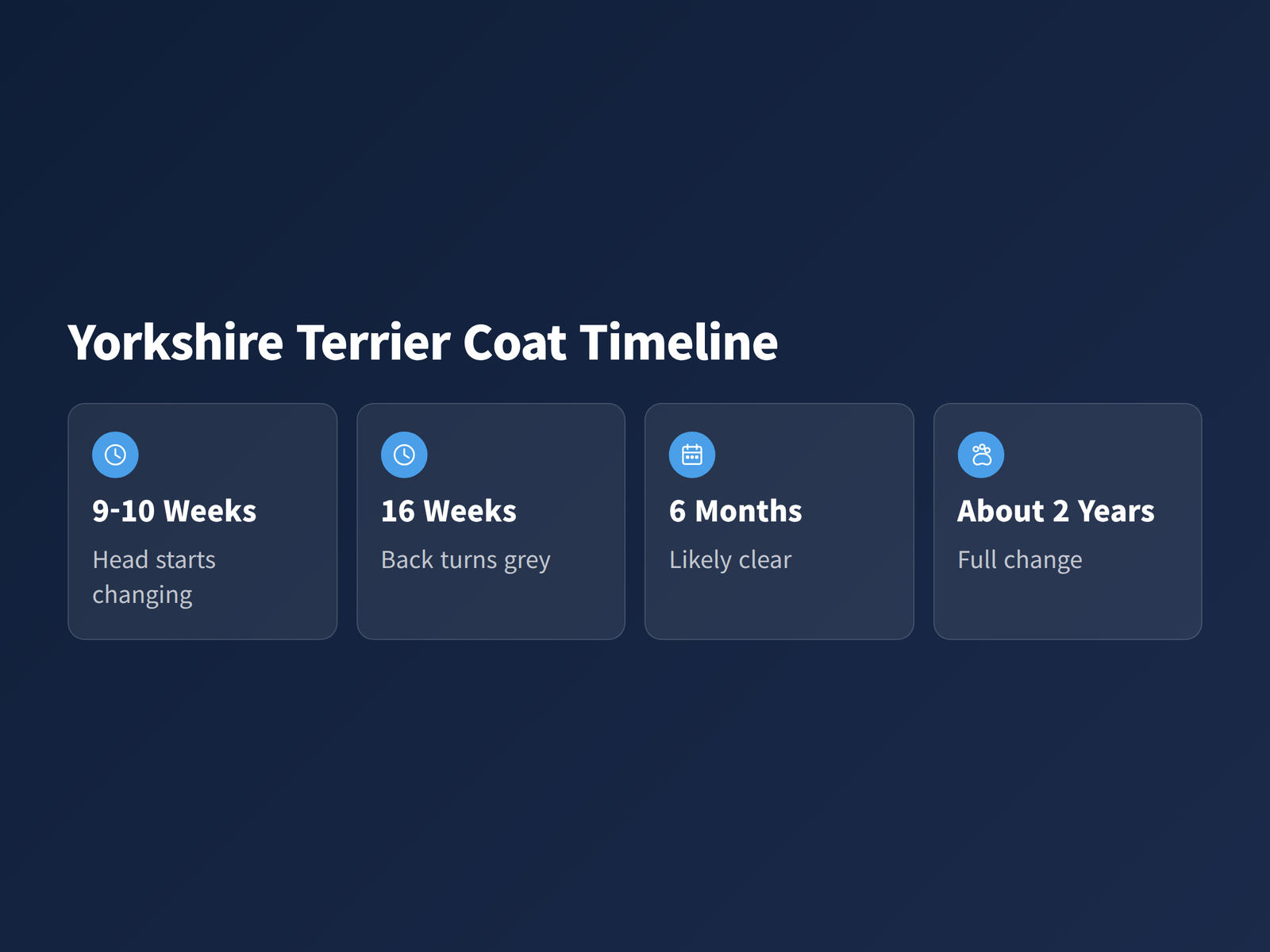
These Yorkshire Terrier stages are approximate ranges, not deadlines. The AKC judges’ education guide for the Yorkshire Terrier shows reference photos at 6 months, 16 months and 2 1/2 years, so a Yorkie coat can still be settling after the second birthday. Texture changes on a separate track as well: the AKC grooming article (updated March 23, 2026) says the puppy coat gives way to the adult silky coat between 6 and 18 months.
Is a Yorkie still black at 6 months normal?
A Yorkie still showing a lot of black at 6 months can be within the normal range, because the full change continues until about age two. The AKC timeline article puts it this way: “By six months, you’ll likely know what color your Yorkie will be (although their full color transition will still take place over the next year and a half until age two).”
The word “likely” matters for a 6-month-old Yorkshire Terrier. By that age the head, where the AKC timeline places the first silver or gold at 9 to 10 weeks, usually shows which way the coat is heading. A dark back at 6 months is not necessarily late. A Yorkie with no lightening anywhere, including the head, is worth checking against the color list below and discussing with the breeder.
Why is silver not the same as steel blue?
Silver is not the goal color for a Yorkshire Terrier; the breed standards ask for a dark steel blue. The AKC standard specifically says “not a silver-blue.” The Royal Kennel Club standard in the UK (page updated April 2025) and the FCI standard No. 86 (published November 10, 2011) use matching wording: “Dark steel blue (not silver blue) … never mingled with fawn, bronze or dark hairs.” Both also ask for chest hair that is a “rich, bright tan.”
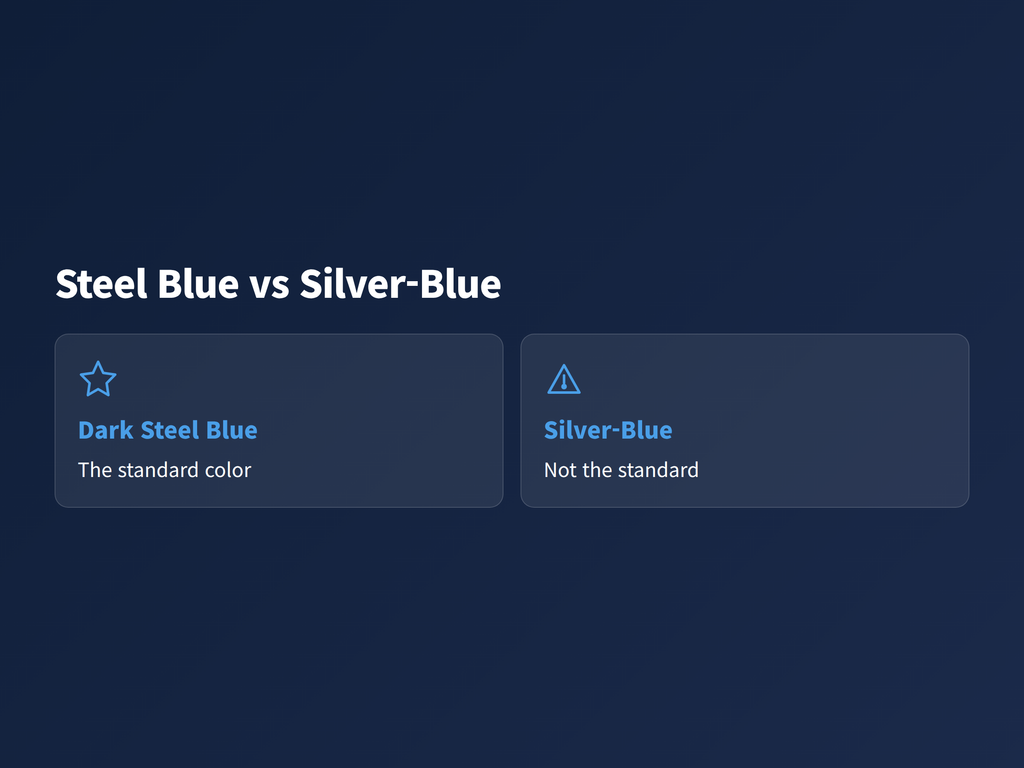
A very light, silvery adult Yorkshire Terrier is not “further along” in the change than a darker dog. Under the AKC, Royal Kennel Club and FCI wording, a silver-blue adult sits outside the ideal color. The AKC judges’ guide adds that the adult head should be “completely free of any remaining black or sooty gray hair left from puppy hood,” so the finished coat is both dark steel blue on the body and clean tan on the head.
Which Yorkie colors never turn blue and tan?
Parti-color, solid colors, chocolate and gold Yorkies do not turn blue and tan with age, because these are different coat patterns, not slow versions of the normal change. The AKC standard lists as a disqualification “Any solid color or combination of colors other than blue and tan as described above.” The AKC standard also disqualifies white markings other than a small white spot on the forechest that does not exceed 1 inch at its longest dimension.
The Yorkshire Terrier Club of America is direct about this in its breed brochure: “Solid brown, solid blue, ‘gold’ or tri-colored Yorkies are mismarks.” A puppy sold as a “rare” chocolate or gold Yorkie is therefore not a Yorkie that is still changing. Waiting will not turn that coat blue and tan. In the AKC system these colors are a show-ring matter; the sources used here do not link a non-standard color to a Yorkshire Terrier’s health, and this guide makes no claim about registration.
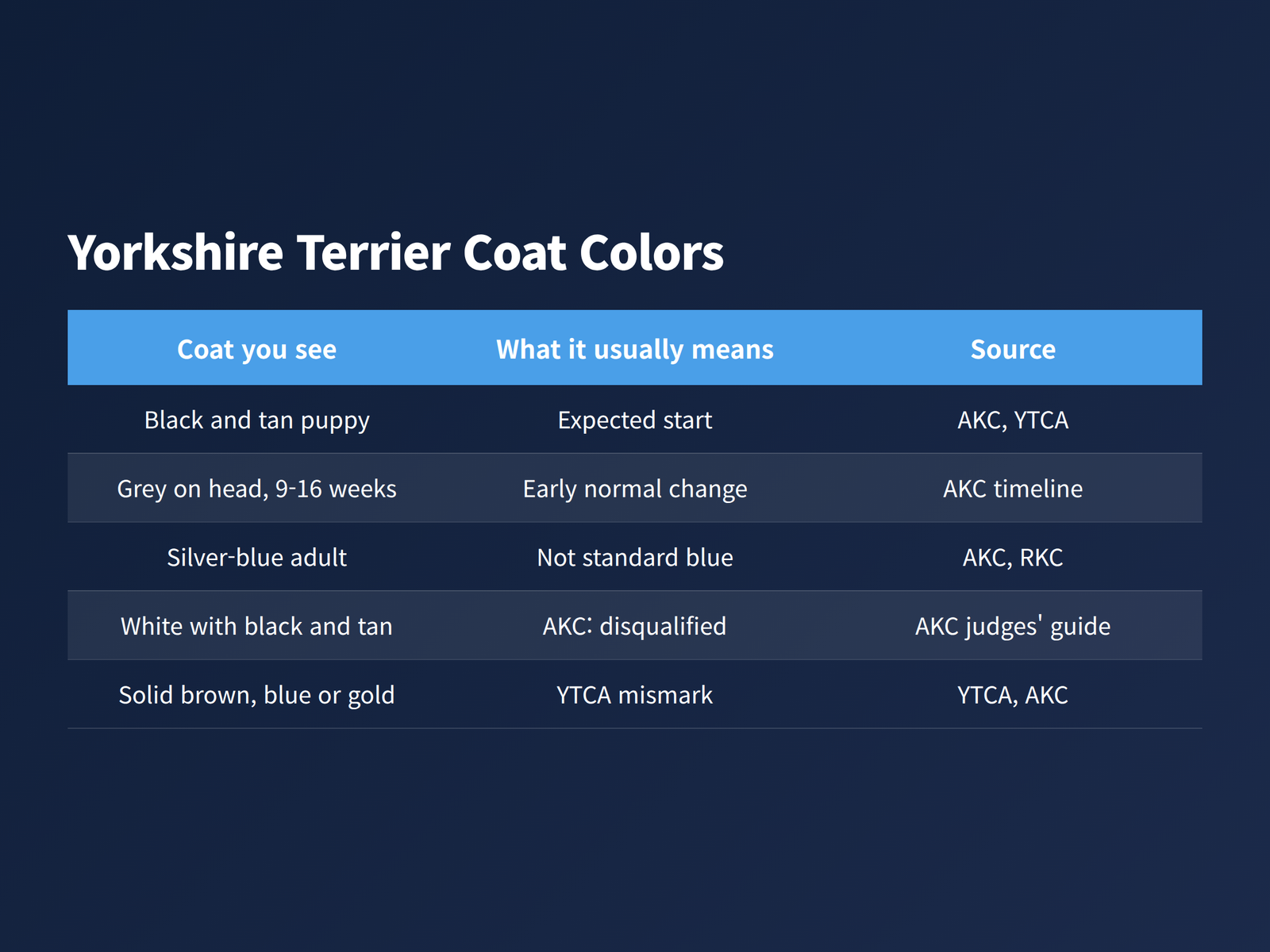
| Coat you see | What it usually means | Source |
|---|---|---|
| Black and tan puppy | Expected start | AKC, YTCA |
| Grey on head, 9-16 weeks | Early normal change | AKC timeline |
| Silver-blue adult | Not standard blue | AKC, RKC |
| White with black and tan | AKC disqualification | AKC judges’ guide |
| Solid brown, blue or gold | YTCA mismark | YTCA, AKC |
Is a parti Yorkie accepted under the Yorkshire Terrier standard?
No; under the AKC standard, a parti-color Yorkshire Terrier is a disqualification in the show ring. The AKC judges’ education guide lists “A white dog with black and tan markings (parti-color)” among the disqualifications. A parti Yorkie will not grow out of the white.
A tri-colored small terrier is not automatically a parti Yorkie, though. The Biewer Terrier, a tri-colored toy breed that traces back to Yorkshire Terriers owned by Gertrud and Werner Biewer in Germany in 1984, was announced as the 197th AKC-recognized breed on January 4, 2021. The AKC describes the Biewer Terrier at four to eight pounds, and an AKC article by Ranny Green notes that “early outcasts were often regarded as ‘mutts,’ designer dogs, or a Yorkshire Terrier with a recessive piebald gene.”
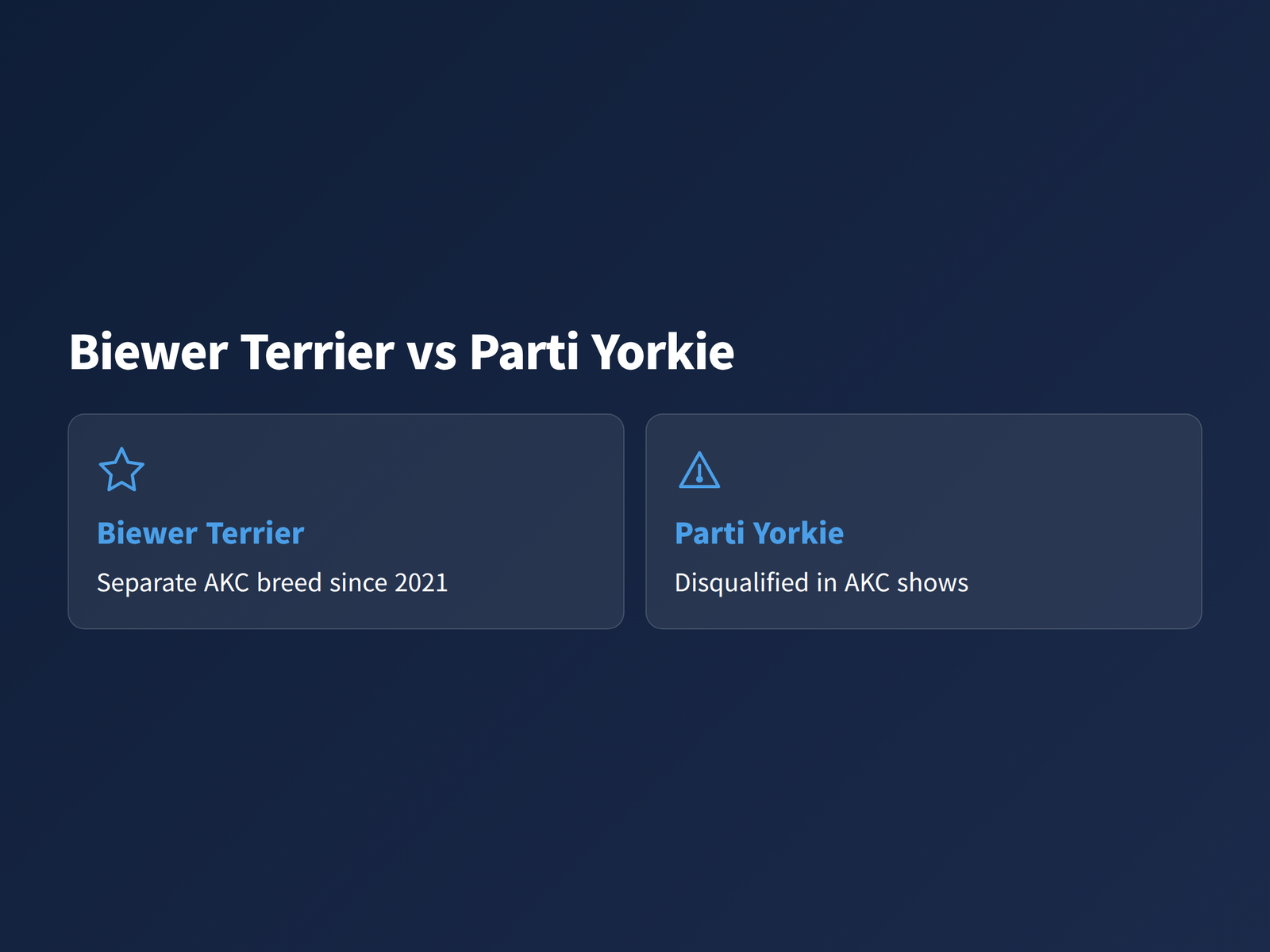
For a buyer, the practical step is to ask which breed a white, black and tan puppy is being sold as. A Biewer Terrier is judged against its own AKC standard, while a parti Yorkie is judged against the Yorkshire Terrier standard, where the white pattern is disqualifying.
What should you check if your Yorkie coat is not changing?
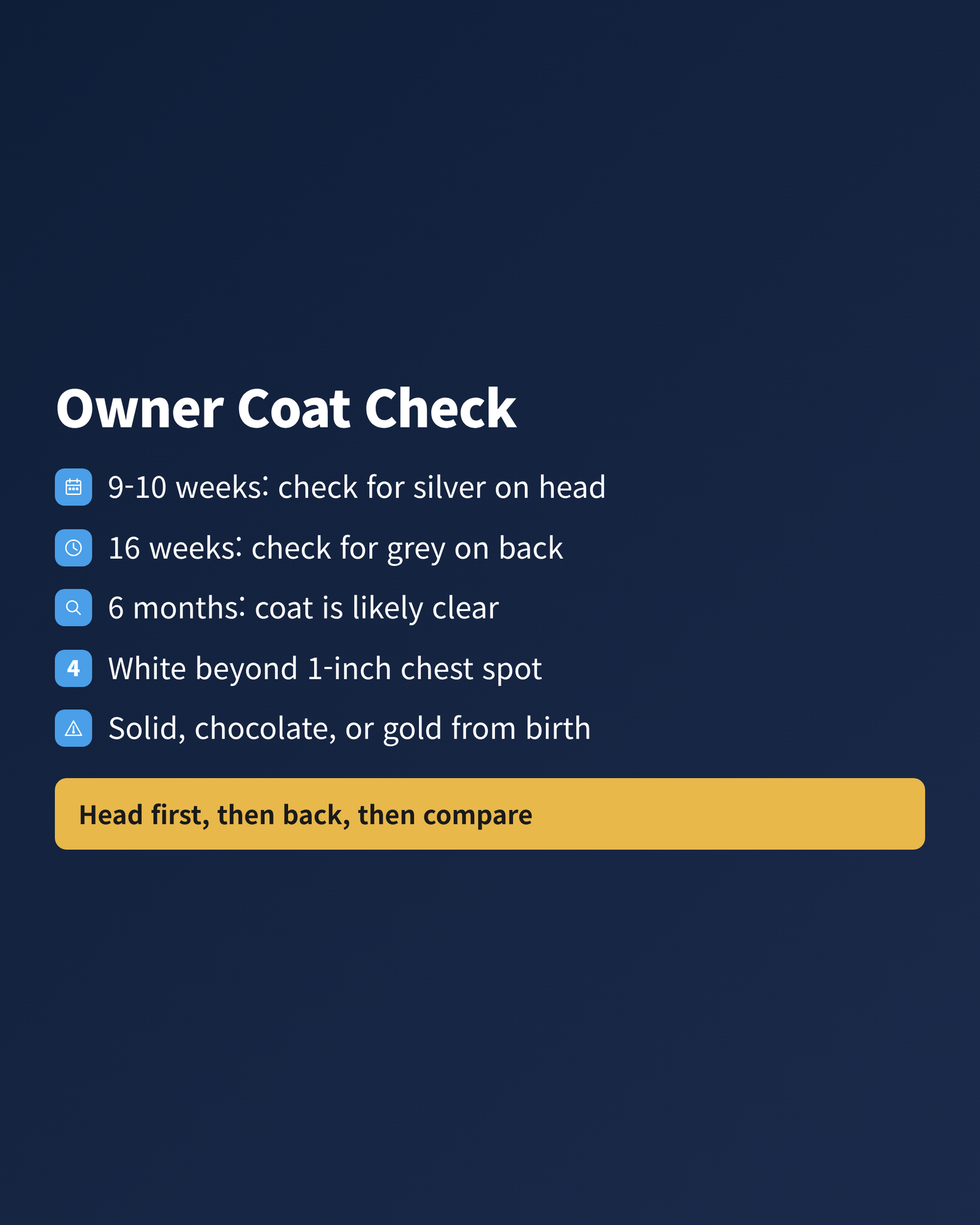
Start with the head, then the back, then compare the Yorkie coat against the standard colors. This owner check follows the AKC timeline, the AKC standard and the YTCA color guidance, in the order the Yorkie coat changes usually appear on a growing puppy:
- Head at around 9 to 10 weeks: look for silver or gold on top
- Back at around 16 weeks: look for black fading toward grey or light silver
- Whole coat at about 6 months: expect a reasonable idea of the final color
- White patches beyond a 1-inch chest spot: a non-standard pattern, not a slow change
- Solid, chocolate or gold coat from birth: a YTCA mismark, not a late bloomer
The breeder who raised the litter is often the best person to compare a Yorkie puppy against its parents’ adult coats. Coat changes in a grown dog are a different matter from puppy color development. If an adult Yorkie’s coat changes suddenly in color or texture, consult your veterinarian rather than treating it as a breed standard question.
Frequently asked questions
Does a Yorkie over 7 pounds still meet the breed standard? The AKC Yorkshire Terrier standard says weight “must not exceed seven pounds,” and the Royal Kennel Club and FCI standards set the limit at up to 3.2 kg (7 lb). A heavier Yorkie is outside the written standard for show purposes. The standard does not describe that dog as unhealthy; weight questions about an individual dog belong with a veterinarian.
Is there a teacup Yorkie size? No. The Yorkshire Terrier Club of America brochure states: “There are no ‘teacup’ or ‘miniature’ Yorkies.” The YTCA also says there are no size distinctions in Yorkies, so “teacup” is a sales label, not a recognized size.
Is a white spot on a Yorkie’s chest allowed? The AKC standard allows a small white spot on the forechest that does not exceed 1 inch at its longest dimension. White markings beyond that small chest spot are listed as a disqualification under the same AKC standard, so a larger white patch will not be outgrown.
Sources
- American Kennel Club, “Official Standard of the Yorkshire Terrier,” approved 2007-07-10, effective 2007-10-01 – https://images.akc.org/pdf/breeds/standards/YorkshireTerrier.pdf
- American Kennel Club, Yorkshire Terrier judges’ education guide, 2005 – https://images.akc.org/judges/Yorkshire_Terrier.pdf
- American Kennel Club, Mary Kearl, “Yorkie’s First Year: Training Timeline,” updated 2021-04-21 – https://www.akc.org/expert-advice/training/yorkie-puppy-first-year-training-timeline/
- American Kennel Club, Mary Kearl, “How to Groom a Yorkshire Terrier,” updated 2026-03-23 – https://www.akc.org/expert-advice/health/how-to-groom-a-yorkshire-terrier/
- American Kennel Club, “American Kennel Club Welcomes Biewer Terrier to its Pack,” 2021-01-04 – https://www.akc.org/press-releases/american-kennel-club-welcomes-biewer-terrier-pack/
- American Kennel Club, Ranny Green, “Meet the Biewer Terrier,” updated 2021-04-27 – https://www.akc.org/expert-advice/dog-breeds/biewer-terrier-akc-recognized-breed-2021/
- American Kennel Club, Jan Reisen, “Facts About the Biewer Terrier,” updated 2026-03-03 – https://www.akc.org/expert-advice/lifestyle/fun-facts-biewer-terrier/
- The Royal Kennel Club, Yorkshire Terrier breed standard, updated April 2025 – https://www.royalkennelclub.com/breed-standards/toy/yorkshire-terrier
- FCI, Standard No. 86 Yorkshire Terrier, 2011-11-10 – https://www.fci.be/Nomenclature/Standards/086g03-en.pdf
- Yorkshire Terrier Club of America, breed brochure – https://wmytc.org/wp-content/uploads/YTCA-Yorkie-Breed_Brochure-DblSided-FlipShortSide.pdf